Book recommendations, reviews, and reading lists.

Spring Snow
by Yukio Mishima
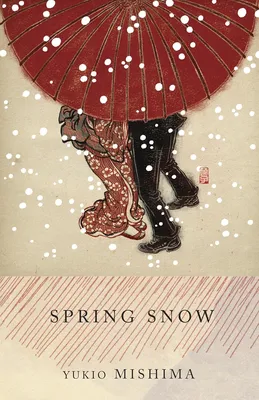
| Publisher | Random House |
| Published | 1999 |
| Pages | 402 |
| ISBN | 9780099282990 |
| Categories | Fiction |
What Readers Say
When I look at how readers talk about Spring Snow, the word that keeps surfacing — even when it isn't said directly — is arresting. This isn't a book people finish and casually shelve. Readers who connect with it describe being pulled into something delicate and almost painfully beautiful, a novel where every scene feels weighted with the kind of emotion that's hard to shake. One commenter mentions reading it alongside No Longer Human, and that comparison makes sense to me: both books deal with characters trapped by their own perception of the world, but where Dazai gives us a man crumbling inward, Mishima gives us a love story that burns quietly until it can't. The praise I see isn't loud or hyperbolic — it's the quieter recognition that this is a writer operating with full control.
The common thread I notice is that Spring Snow works best when you understand what you're signing up for. This is Mishima at his most emotionally direct, which sounds like it should mean accessible, but it actually means unflinching. Readers point out that the tetralogy this book launches — The Sea of Fertility — is an attempt to sum up Japanese civilization itself across multiple lifetimes, and that ambition is palpable from page one. What surprises people, I think, is how intimate it feels despite that scope. The philosophical weight is there, but it arrives through stolen glances and impossible choices, not through lectures. Some readers do bounce off Mishima entirely — one source flatly says he's "not everyone's appetite" — but for those who stay, the consensus seems to be that there's nobody else quite like him.
Who It's For
This is for readers who want Japanese literature that doesn't just observe beauty but dissects it. If you finished The Temple of the Golden Pavilion and needed more of that same obsessive, almost uncomfortable intimacy with aesthetic perfection, Spring Snow is the natural next step. I'd also point fans of Dazai's alienation here — not because the style matches, but because both authors understand characters who are fundamentally incapable of simple happiness, and both make that incapacity feel like the most logical response to the world.
More broadly, if you're someone who appreciates a novel that asks you to be patient — where the accumulation of detail and emotional pressure matters more than plot momentum — this delivers. The readers who recommend it often mention it as a starting point for Mishima, but I'd refine that: start here if you've already tested the waters with Confessions of a Mask and want to see what he does with a broader canvas. This is the moment Mishima's obsessions expand beyond the self and into history.
Reading Context
Spring Snow is the first book in the Sea of Fertility tetralogy, and knowing that changes how you read it. The source material calls it the most emotionally direct of the four, which suggests the later volumes shift in tone or ambition — readers don't always commit to the full cycle, but starting here gives you the cleanest entry point. Several readers recommend reading Confessions of a Mask first and then The Temple of the Golden Pavilion before tackling this, essentially treating Mishima's bibliography as a ladder of increasing density. That tracks for me: you learn his language in the earlier books before he asks you to follow him across decades and reincarnated souls.
For companion reading, the mentions draw natural lines to No Longer Human for thematic resonance and The Woman in the Dunes if you want to branch into other mid-century Japanese authors doing psychologically intense work. There's no adaptation mentioned in these conversations, so this is purely a reading experience — one best approached with the awareness that Mishima is, as one source puts it, the most maximalist and obsessive writer in this tradition. Give yourself room for that weight.