Book recommendations, reviews, and reading lists.

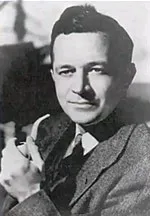
Murray Leinster
1 book on Read & Recommend
What Readers Say
Leinster doesn't surface in modern recommendation threads the way the big living-room names do — he's a golden-age figure, prolific enough across five decades to earn the nickname "the Dean of Science Fiction." Where he does come up now, it's for one astonishing piece of foresight: "A Logic Named Joe" (1946), a short story that imagined networked home computer terminals — "logics" — sitting in every house, answering any question you put to them, and the chaos that follows when one starts giving people whatever they ask for. Readers and critics alike keep rediscovering it as one of the most accurate predictions the genre ever made: essentially the internet, search engines, and the misinformation problem, sketched decades before any of it existed.
Where to Start
Start with "A Logic Named Joe." It's short, it's widely anthologized (including in the Baen collection that carries its name), and it's the clearest reason his name still circulates. From there, his 1945 novella "First Contact" is the other historically important stop — it helped define the first-contact story as a subgenre.
Reading Context
Leinster belongs to the pulp and golden-age era, and he's best read as a foundational figure rather than a contemporary favorite — the interest is largely in how far ahead of his time his ideas ran. On this site he appears in "Sci-Fi Books That Predict Society, Not Just Tech" precisely for that reason: "A Logic Named Joe" is exhibit A for the argument that the genre saw the networked future coming long before the hardware did.