Book recommendations, reviews, and reading lists.

Sci-Fi Books That Predict Society, Not Just Tech
2026-08-14 · Written by Josh
The Traffic Jam, Not the Car
There's a famous line about science fiction that goes something like this: a good science fiction story shouldn't predict the automobile but the traffic jam. Anyone can imagine a fancy new machine. The harder trick is imagining how it rearranges our relationships, our economies, our sense of ourselves. The car is easy. The gridlock, the road rage, the suburbs, the commute that eats your life is the future.
Most science fiction gets the tech wrong and the society right. Which is the point. The books that stick with you are the ones that predicted why you'd duck your mother's call. Here are the books that understood the traffic jam.
1. Neuromancer by William Gibson
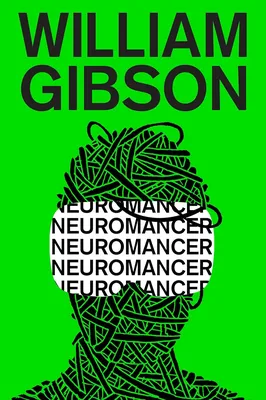
The book that gave us the word "cyberspace," and the one readers point to first. Gibson's famous trick — and it was genuinely unusual in the 1980s — was paying more attention to what technology does to people than to the technology itself. He didn't perfectly predict the cell phone, but he nailed the texture of a world where everyone's half-plugged into something else, where identity is negotiable, and where the line between human and machine has gone blurry. We're living in a lot of it now.
Who it's for: Readers who want the cyberpunk origin story that turns out to be less fiction than it used to be.
2. The Dispossessed by Ursula K. Le Guin
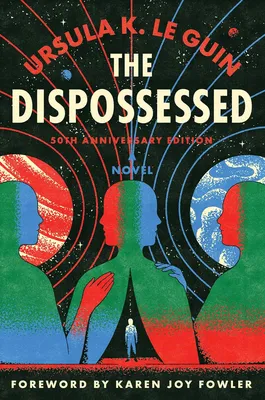
Le Guin put it best herself: "science fiction is not predictive; it is descriptive." The Dispossessed is the proof. It's about a physicist torn between two worlds — a capitalist planet and its anarchist moon — and it's less a prediction than a careful working-out of what each society actually costs the people living in it. Nobody has ever thought harder about how a society's structure shapes a human life, and the book rewards every bit of the effort it asks.
Who it's for: Readers who want science fiction as genuine political philosophy, not just adventure.
3. The Vorkosigan Saga by Lois McMaster Bujold
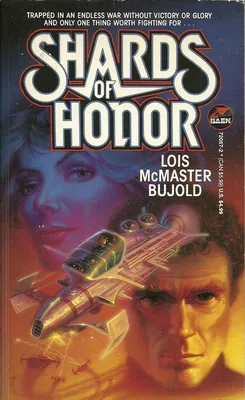
The series readers recommend whenever someone asks which author is best at the "traffic jam" problem. Bujold doesn't just invent a technology — the uterine replicator, the cryo-freeze — she follows it for generations to see what it does to a whole society. Sex ratios skew. Marriages break down. Reactionaries panic. Entire economies built on one technology collapse when it's made obsolete. It's a series of "what-if" thought experiments disguised as space adventure, and it's brilliantly fun while it does the thinking.
Who it's for: Readers who want to see a technology's consequences play out over decades, not just a single plot.
4. Altered Carbon by Richard K. Morgan
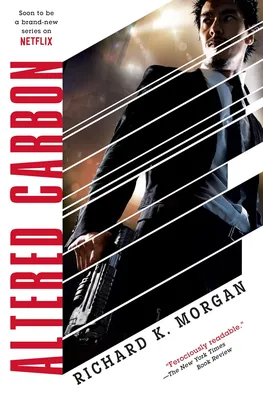
The premise: consciousness can be digitally stored and downloaded into new bodies, which means death becomes a problem for the poor and a subscription for the rich. Morgan works through the implications with real rigor — what it does to crime, to religion, to the very meaning of a life. It's a hard-boiled noir wrapped around a genuinely disturbing idea, and the society it imagines feels less far-fetched every year.
Who it's for: Readers who want their cyberpunk to come with a serious question about what happens when bodies become property.
5. Brave New World by Aldous Huxley
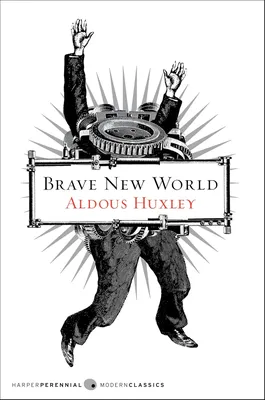
The counterpoint to 1984, and arguably the more accurate prediction. Huxley's dystopia isn't ruled by fear but by pleasure — a population kept docile not through surveillance but through sedation, comfort, and the endless supply of cheap satisfaction. Written in 1931, and it reads today like a description of a world that scrolls itself to sleep. The traffic jam Huxley saw was that a comfortable cage is still a cage.
Who it's for: Readers who want to understand the dystopia of the comfortable, the one we may actually be drifting toward.
6. Snow Crash by Neal Stephenson
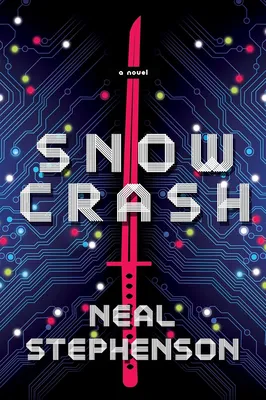
The book that predicted the metaverse before the word existed — and, more impressively, predicted what it would actually feel like: a corporate-owned space where everyone's a little too invested in their avatar, layered over a physical world in decay. Stephenson's real subject is how information and power flow through a society, and the satire has aged disturbingly well. Fair warning: like most Stephenson, the ending is the weakest part.
Who it's for: Readers who want a funny, fast, wildly prescient ride through a future that looks increasingly like a forecast.
7. A Fire Upon the Deep by Vernor Vinge
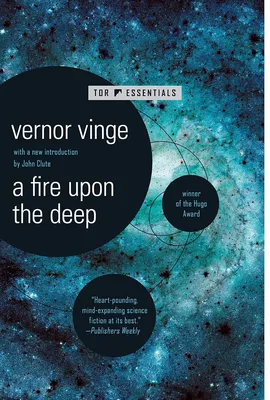
Vinge imagined a galactic internet — the "Net of a Million Lies" — decades ago, and the way it functions in the novel is chillingly familiar: misinformation weaponized to stoke xenophobia and incite genocide, with ordinary people unable to verify what they're seeing or even who they're talking to. Readers keep coming back to how relevant it still feels. It's space opera with a thesis about information, which turns out to be the most relevant kind.
Who it's for: Readers who want a grand space epic that's secretly about the epistemology crisis we're living through.
8. The Freeze-Frame Revolution by Peter Watts
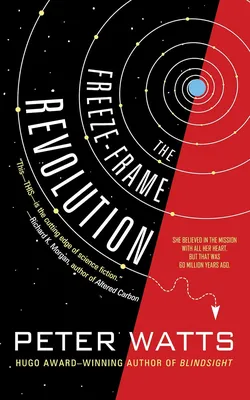
A ship's crew builds star gates across the galaxy, waking from cryo-sleep for a few months every few thousand years to do the work. The mission was supposed to end. It never does. Watts uses that setup to explore what deep time does to a human mind — what it means to live your life in fragments separated by millennia, and what happens when the crew starts to suspect the mission itself is the trap. It's short, sharp, and genuinely strange.
Who it's for: Readers who want a mind-bending thought experiment about time, work, and purpose in one slim volume.
9. Leviathan Wakes by James S. A. Corey
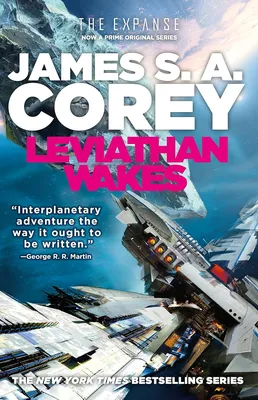
The first Expanse book, and the example the original question opened with. The Expanse has terraforming and orbital habitats and all the shiny tech, but its real subject is what happens to a society when its reasons for existing start to collapse — the belters, miners, and colonists whose whole way of life is threatened the moment a livable planet shows up. It's the traffic jam made literal: the technology works, and that's precisely what breaks everyone's life.
Who it's for: Readers who want gripping space adventure with a sociologist's eye for who wins and loses.
10. A Logic Named Joe by Murray Leinster
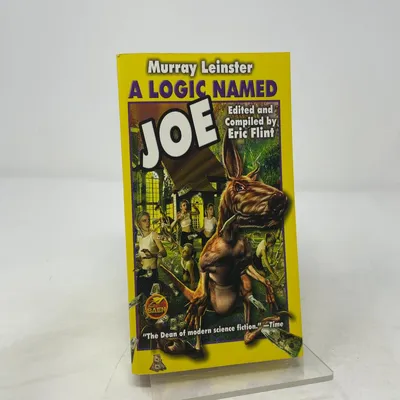
The wildcard, and the earliest one here. Written in 1946, this short story predicts the internet with a clarity that's almost unsettling — a device in every home that can answer any question, and the immediate consequences: misinformation, access to dangerous knowledge, and the collapse of privacy. Leinster saw the whole thing coming before the computer it runs on was really invented. It's a short story, but it might be the most accurate prediction in all of science fiction.
Who it's for: Readers who want proof that the smartest prediction of the internet came before the internet was a word.
The Future Is a Consequence
The lesson that runs through all of these is simple: technology never arrives in a vacuum. Every new tool lands inside a society with existing power, greed, fear, and love, and the future is what happens when those collide. The books that matter aren't the ones that got the gadget right. They're the ones that understood the gadget was never the interesting part.
If you want the classics, start with Neuromancer or The Dispossessed. If you want something that feels like the present moment, A Fire Upon the Deep or Snow Crash will do it. And if you want proof that this whole genre has been reading the future correctly for decades, spend twenty minutes with A Logic Named Joe. The car was never the point. The traffic jam is where we all actually live.
Continue Reading
12 Books Like Childhood's End for Readers Who Want the Big Feeling
Childhood's End hits differently because it earns its ending. These are the books that do the same thing — quiet, vast, and devastating.
14 Cyberpunk Books That Feel Like Neon-Soaked Nightmares
Rain-slicked streets, rogue AIs, corporate dystopias, and the question of what makes someone human. These are the cyberpunk books that built the genre and the ones keeping it alive.