Book recommendations, reviews, and reading lists.

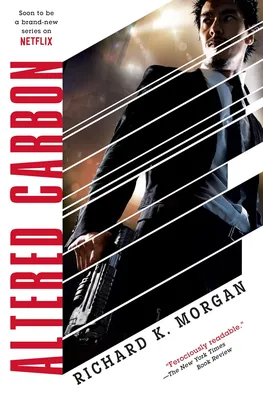
Altered Carbon
by Richard K. Morgan
| Publisher | National Geographic Books |
| Published | 2003-03-04 |
| Pages | 392 |
| Categories | Fiction |
| Google Rating | 4.0/5 (1 ratings) |
What Readers Say
Altered Carbon shows up in S-tier lists more than almost any other cyberpunk novel — people stack it alongside Hyperion, Neuromancer, and The Demolished Man as the kind of book worth rereading for the rest of your life. The central concept is what earns it that status: consciousness digitized, stored on a chip, and sleeved into whatever body you can afford. Morgan doesn't use that as window dressing. He runs it through every corner of the story — who gets to die, who gets to live, what violence means when death is technically reversible. One reader in a thread about predictive science fiction put it cleanly: he expertly imagines the effects that technology to digitally record a person's consciousness has on society. That's the core of why people can't stop recommending it.
What surprises readers is how much of it works as straight detective fiction. It gets recommended in gritty hardboiled threads right alongside pure sci-fi requests — "a cyberpunk detective classic" is a phrase that comes up more than once. The action is consistently described as fast, furious, and brutal in a way that has actual weight, not video-game weight. There's a mild contingent who found it just fine without being blown away, but they're outnumbered by people going directly to the sequels or putting it on a desert-island reread list.
Who It's For
This is the book I'd hand to someone who has burned through Philip K. Dick and wants something that carries the same philosophical ambition but moves faster and hits harder. If you've been waiting for a noir detective story that takes its science fiction seriously — not as decoration but as the actual source of the tension — Altered Carbon is where to go. It also lands well for readers who want posthumanism explored in fiction: Reddit consistently groups it with The Moon is a Harsh Mistress and The Culture series as the best the genre has on what it means to be human when the body is just hardware.
Readers who want "mainstream badass hard sci-fi" and get frustrated when literary ambition slows down the plot will find this one satisfying. It's not slow. The worldbuilding gets in through the investigation, not through exposition, and that makes the difference.
Reading Context
Reddit places Altered Carbon in the cyberpunk canon alongside Neuromancer, Snow Crash, and When Gravity Fails — and those comparisons are earned. It reads like a natural next stop after Gibson if you're working through that tradition: less experimental in prose, more interested in plot mechanics and violence, and more focused on what happens to identity and class when bodies become interchangeable than on corporate dystopia for its own sake. For readers tracing how science fiction thinks about posthumanism, it fits the same shelf as The Culture series and The Moon is a Harsh Mistress.
The book is the first in a trilogy, but it stands alone without any loose ends dangling. The sequels — Broken Angels and Woken Furies — are both well-regarded, though each shifts Kovacs into a different setting and genre mode. Market Forces, Morgan's standalone from the same era, gets explicitly skipped by multiple readers who otherwise love the Kovacs books. The Netflix adaptation from 2018 brought a lot of new readers to the source material; the book is worth it even if you've seen the show, because Morgan's version of Bay City runs grimmer and Kovacs's interiority runs deeper than what the adaptation had room for.