Book recommendations, reviews, and reading lists.

12 Books Like Childhood's End for Readers Who Want the Big Feeling
2026-08-26 · Written by Josh
The Ending That Comes for Everyone
There's a kind of science fiction that's less about rockets and more about reckoning. It asks what humanity would look like from the outside, what the arc of our species might be, what it would feel like to be present at the moment when everything changes irrevocably. Arthur C. Clarke wrote it better than almost anyone, and Childhood's End is where he did it best.
The book works because it earns its devastation. The Overlords arrive, humanity gets a golden age, and then the bill comes due. What makes it unbearable in the best way is that there's no villain. Just the indifferent machinery of the universe doing what it does.
Finding books that hit the same chord is genuinely difficult. Most science fiction is too optimistic or too focused on individual survival. These twelve books come the closest to the feeling — the sense of scope, the willingness to let the ending be what it has to be, the quiet devastation that lingers for days.
1. Blood Music by Greg Bear
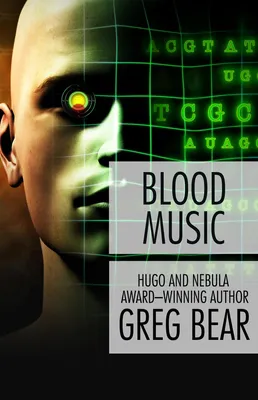
The most direct comparison on this list, and the one readers recommend most often. A biologist engineers intelligent bacteria, injects them into himself to hide them from his company, and then watches as they transform everything. The scope expansion here mirrors Childhood's End closely: it starts small and human and ends somewhere vast and incomprehensible. Bear treats the science with unusual rigor, and the horror of what unfolds is inseparable from the wonder.
Who it's for: Readers who want the scope shift of Childhood's End with a harder science foundation and a more biological horror underneath.
2. Ender's Game by Orson Scott Card
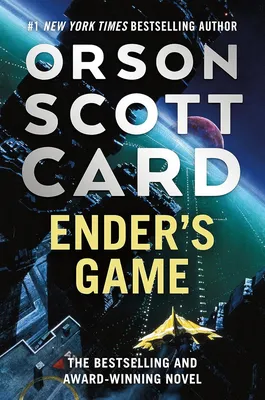
If you haven't been spoiled on the ending, stop reading this description and go get the book. The first two-thirds are a compelling military academy novel about a child being trained to fight in humanity's most important war. The last third is why it's on this list. The ending lands as one of the more morally serious gut-punches in genre fiction — the kind that recontextualizes everything you just read in a way that leaves you sitting with it for a while.
Who it's for: Readers who want their SF emotionally devastating in a way they don't see coming.
3. The Three-Body Problem by Liu Cixin
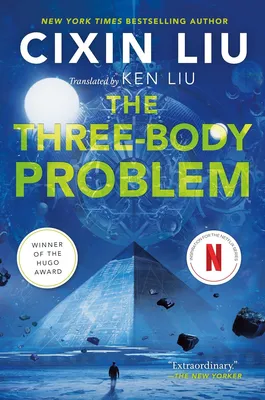
The scope here is even larger than Childhood's End — Liu is working across centuries and civilizations in a way that few SF writers attempt. The first book is a slow burn, rooted in the Cultural Revolution and a physicist's attempt to understand something impossible. By the end of the trilogy, the scale has expanded to encompass the entire structure of the universe and the logic of survival at a cosmic level. The middle book, The Dark Forest, is where it hits hardest.
Who it's for: Readers who want the full philosophical weight of first contact — the cost of it, the logic of it, the thing it does to you when you understand the answer.
4. Blindsight by Peter Watts
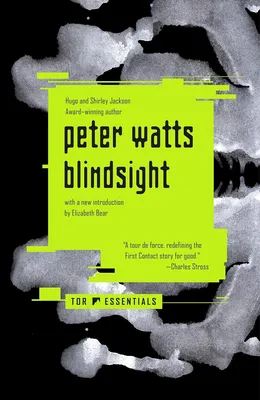
A first-contact mission finds something at the edge of the solar system that is genuinely, foundationally alien — not alien like a human actor in face paint, but alien in a way that puts human consciousness itself into question. Watts is a marine biologist who writes hard SF with the pessimism of someone who has read too much cognitive science, and Blindsight is the novel where he asks whether consciousness is even useful as an evolutionary trait. The answer is not reassuring.
Who it's for: Readers who want first contact that is philosophically disturbing in ways that stick around after the book ends.
5. The Day of the Triffids by John Wyndham
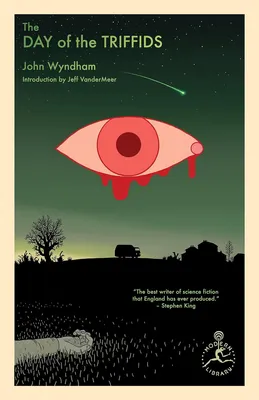
Most of humanity is blinded by a meteor shower overnight. The triffids — mobile, carnivorous plants that were already being farmed for their oil — are now the dominant species. Wyndham is doing something similar to Clarke: a civilization-ending event rendered with remarkable restraint, focusing on the psychological and social disintegration of the survivors. The horror here isn't the triffids. It's watching everything that humans built become irrelevant in a single night.
Who it's for: Readers who want a civilization-collapse novel that takes the loss seriously rather than using it as an adventure backdrop.
6. The Chrysalids by John Wyndham
Post-apocalyptic, set centuries after a nuclear catastrophe, in a theocratic community that hunts down and destroys any genetic deviation from the norm. The protagonist can communicate telepathically, which is the deviation that will end him. Wyndham is arguing something here about evolution, about what humanity is versus what it is becoming, and the ending lands in a similar emotional register to Childhood's End: a transformation that is simultaneously a loss and something larger.
Who it's for: Readers who want the bittersweet evolution theme of Childhood's End set in a post-collapse world with a more personal scale.
7. Forge of God by Greg Bear
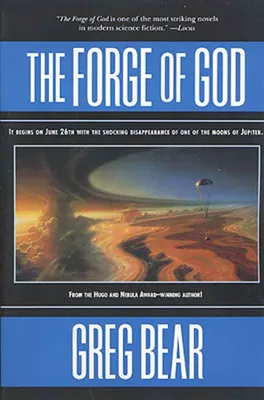
An alien artifact is discovered in Death Valley. Shortly after, a second one appears on the other side of the world with a different message. Bear is setting up a first-contact scenario and then refusing to resolve it the way the genre usually does. What happens to Earth in this book is one of the more gutting things I've read in SF, and Bear doesn't let you look away from it.
Who it's for: Readers who want a first-contact novel that goes somewhere darker and more honest than the genre usually permits.
8. 2001: A Space Odyssey by Arthur C. Clarke
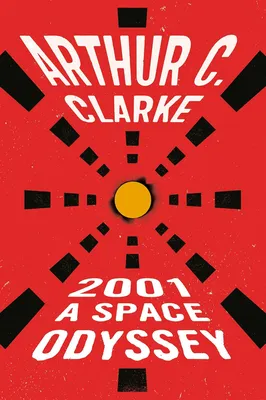
If you loved Childhood's End, you've almost certainly read this. If you haven't, it's the obvious next Clarke to reach for. The film is magnificent but the novel is doing different things — quieter, stranger, more interested in the mechanics of transcendence than the spectacle of it. HAL is only part of the story. The ending is Clarke at his most explicitly mystical, and it lands in a register of hushed awe that few writers manage.
Who it's for: Clarke readers who want more Clarke. The obvious answer, but the right one.
9. The Three Stigmata of Palmer Eldritch by Philip K. Dick
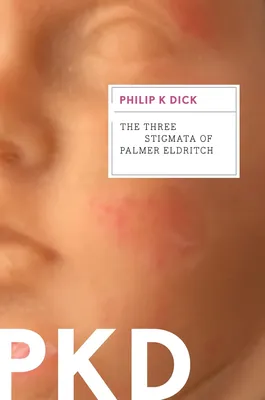
A hallucinogenic drug dispersed across Martian colonies allows users to inhabit a shared consumer fantasy. Then Palmer Eldritch returns from the edge of the solar system with a new drug and something wrong behind his eyes. Dick is working in a different register than Clarke — paranoid and theological rather than awed and resigned — but the questions he's asking are similar: what are we becoming, and is what replaces us better? The ending doesn't resolve, which is the point.
Who it's for: Readers who want the transformation theme of Childhood's End run through a paranoid 1960s drug nightmare.
10. A Half-Built Garden by Ruthanna Emrys
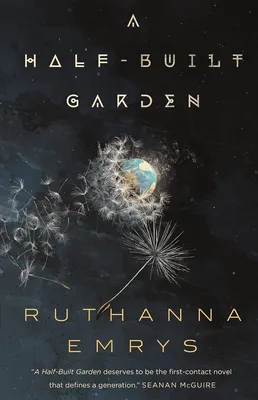
A first-contact novel from 2022 that's doing something quietly radical: the aliens arrive not with a threat but with an offer, one that humanity has to decide whether to accept. Emrys is explicitly in conversation with Childhood's End, and she approaches the question of transcendence differently — from a feminist, ecological perspective that's less resigned and more argumentative. Whether you agree with where she lands, the book earns the argument.
Who it's for: Readers who want a direct response to Childhood's End from a contemporary perspective that challenges some of Clarke's assumptions.
11. Lilith's Brood by Octavia Butler
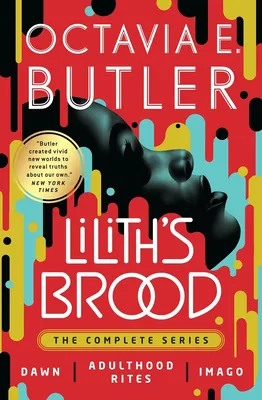
The trilogy — Dawn, Adulthood Rites, Imago — opens with humanity's survivor, Lilith, waking up in alien captivity. The Oankali have saved us from ourselves and want something in return. Butler is doing something similar to Clarke but with more complicated feelings about it: the transformation here is not clean or peaceful, and Butler refuses to let the reader off the hook about what humanity loses. Three books, each one harder than the last, ending somewhere in the vicinity of Childhood's End's final note.
Who it's for: Readers who want the transformation arc of Childhood's End complicated by questions of consent, power, and what we actually want.
12. The Moon Is a Harsh Mistress by Robert A. Heinlein
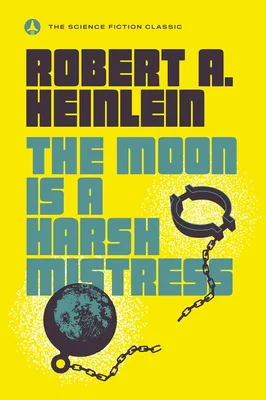
The outlier on this list — a revolution novel rather than a transcendence novel — but the emotional relationship to scale is similar. Heinlein is following a lunar colony's rebellion against Earth, and the AI at the center of it is one of the more affecting characters in classic SF. What happens to Mike is the part that lands in the vicinity of Childhood's End: the price paid for something larger than individual survival.
Who it's for: Readers who want classic SF with political and emotional weight, and who can handle Heinlein's era-specific opinions on several things.
Where to Start
If you want the most direct path to the Childhood's End feeling: Blood Music is the obvious first choice, followed by Blindsight for something colder and more unsettling, then A Half-Built Garden for a contemporary response to the whole conversation Clarke started.
The books that hit you like Childhood's End are rare because they require a willingness to let things end rather than resolve. These twelve are willing.
Continue Reading
15 Sci-Fi Horror Books Where the Science Is the Monster
When the experiment goes wrong, the AI wakes up, or the DNA splices itself into something new — these are the books that turn science into nightmare fuel.
Sci-Fi Books That Predict Society, Not Just Tech
The best science fiction doesn't predict the gadget — it predicts what the gadget does to us. The traffic jam, not the car. These are the books that got society right.