Book recommendations, reviews, and reading lists.

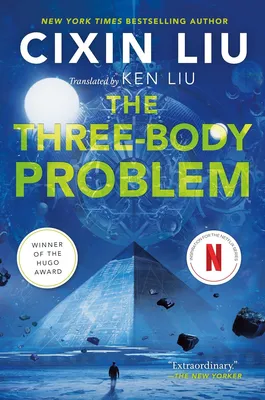
The Three-Body Problem
by Cixin Liu
| Publisher | Tor Books |
| Published | 2014-11-11 |
| Pages | 400 |
| ISBN | 9781466853447 |
| Categories | Fiction |
What Readers Say
The Three-Body Problem is the book readers name when they want hard science fiction that refuses to make the universe comforting. It comes up over and over from people who say that once you really internalize modern physics and cosmology, most SF starts to feel like fantasy with technobabble — and that this book is one of the few that still holds up, because it treats physical constraints as unavoidable rather than something to hand-wave away. It sits in that same shelf as Blindsight, Tau Zero, and Diaspora for readers who want the science to limit the story instead of enabling it.
The other thing readers highlight is its coldness — and they love it. The series offers what one reader called "a holistic and cold representation of how human civilization will respond to a malevolent alien invasion." It opens with an act of despair — a scientist who, after watching humanity strip-mine the natural world, decides we don't deserve to be left alone — and it lands on plot-twist and mind-bending lists for a reason. This is big-idea SF with a modern voice.
Who It's For
This is for readers who want their science fiction rigorous and unsentimental — people who are tired of stories that make space feel cozy and want first contact rendered as a genuine, civilization-level threat. If you loved the clinical dread of Blindsight or want hard SF that still feels believable after you've read real physics, this is the one. Fair warning: the characters serve the ideas here, so come for the concepts and the cosmic scale rather than warm character work.
Reading Context
This is the first book of the Remembrance of Earth's Past trilogy (often just called the Three-Body trilogy), and readers who love it consistently urge you to go straight into The Dark Forest afterward — that's where many think the series peaks. It reached a huge audience in Ken Liu's English translation and got a Netflix adaptation, so it's an easy entry point for readers curious about Chinese science fiction. On my lists it anchors the hard-SF, big-ideas end of the spectrum, right alongside A Memory Called Empire for modern voice and Blindsight and Solaris for the dark, philosophical stuff.