Book recommendations, reviews, and reading lists.

Ryunosuke Akutagawa
2 books on Read & Recommend
What Readers Say
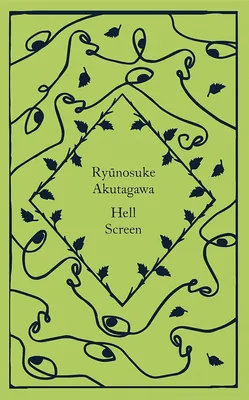
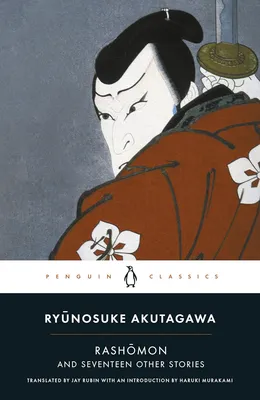
When I sift through the mentions, Akutagawa is consistently talked about as a master of the unsettling short story—his style is sharp, psychologically probing, and often cruel in its clarity. Readers describe his prose as elegant but unflinching, pulling you into moral mazes where truth splinters and human nature turns ugly. The stories in Rashomon and Seventeen Other Stories and the standalone Hell Screen come up again and again as examples of his ability to make you squirm while marveling at the craft. Praise centers on his concision: no wasted words, every image a blade. The flip side, if I’m reading between the lines, is that his work can feel relentlessly bleak—definitely not comfort reading.
Where to Start
If you’re new to Akutagawa, almost every recommendation path points to Rashomon and Seventeen Other Stories as the natural entry point. It collects his most iconic tales, including “Rashomon” and “In a Grove,” which are the perfect one-two punch to understand his obsession with subjective truth and moral rot. That collection gives you range—historical parables, autobiographical fragments, and modern grotesqueries. For a more focused dose of his darkness, Hell Screen is the novella that gets singled out as a standalone masterpiece. I’d say that’s for the reader who wants to see Akutagawa at his most artistically obsessive and horrifying without committing to a large volume.
Reading Context
In the broader landscape of Japanese literature, Akutagawa sits comfortably among the pantheon of early-to-mid 20th-century masters that Reddit readers routinely bundle together—I see him mentioned alongside Natsume Soseki, Osamu Dazai, Yukio Mishima, and Junichiro Tanizaki, all of whom appear in the same “best Japanese classics” conversations. He’s the bridge between Soseki’s psychological realism and the postwar existential despair of Dazai and Mishima, with a cynical edge that feels uniquely modern. While I don’t spot specific adaptation talk in these particular mentions, the cultural footprint of “Rashomon” extends far beyond the page, and readers often discover him through a chain of influence that runs through film and contemporary literature. If you’re building a foundation in Japanese classics, Akutagawa’s name is non-negotiable.