Book recommendations, reviews, and reading lists.

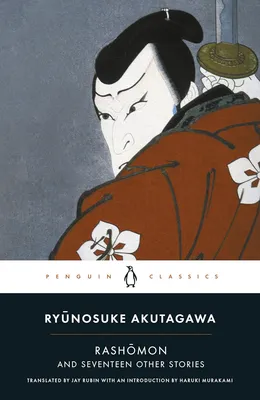
Rashomon and Seventeen Other Stories
by Ryunosuke Akutagawa
| Publisher | Penguin UK |
| Published | 2007-04-05 |
| Pages | 393 |
| ISBN | 9780141902876 |
| Categories | Fiction |
What Readers Say
The mentions I have for this collection are quiet—more a knowing nod than a noisy book-club debate. It shows up on a best Japanese classics list tucked between Kokoro and No Longer Human, and that placement says everything. No one in these threads is arguing about which translation cuts deepest or complaining that a particular story drags. Instead, there’s an unspoken consensus: Akutagawa’s stories simply belong. Readers treat the volume as essential, a concentrated hit of early 20th-century Japanese modernism that doesn’t need defending. I get the sense that what surprises people isn’t any single twist, but the sheer range packed into one spine—from the psychological violence of “Hell Screen” to the sly, shifting perspectives that made Rashomon a household word.
Who It’s For
This is for the reader whose shelves already hold Sōseki’s Kokoro or Dazai’s No Longer Human and who wants to walk further back into the lineage. The company the book keeps in its mentions tells me it’s for someone who trusts the foundational texts but wants the scalpel-sharp precision of short fiction. If you’ve heard Akutagawa’s name whispered because of “Hell Screen”—that story is in here, and it’s as devastating as its reputation suggests. You’ll be drawn to this if you love work that dissects ego, truth, and cruelty in a few dozen pages, and if you’re the type who believes a single, well-chosen detail can do more than a hundred pages of exposition.
Reading Context
The threads don’t offer a reading order, but seeing this collection nestled among Dazai, Mishima, and Kawabata places it squarely at the gateway to darker modern Japanese fiction. I’d slot it right after Kokoro if you’re building a syllabus in your head—it bridges Sōseki’s psychological realism and the fractured, postwar sensibilities of No Longer Human. A quick orientation note: Kurosawa’s film Rashomon famously borrows its atmosphere and name from the opening story here, but its plot comes from “In a Grove,” also in this collection, so you get both source texts in one volume. The Penguin Classics edition comes with an introduction by Haruki Murakami, and that’s a gentle, familiar handshake for anyone stepping into Akutagawa’s world for the first time.