Book recommendations, reviews, and reading lists.

12 Books to Read When You're High
March 23, 2026 · Written by Josh
Some Books Are Just Built for This
There's a specific kind of reading experience where the prose do something to your brain and three hours disappear. You could call it immersion. You could call it flow state. Or you could be honest about the fact that some books are just built to be read in an altered state.
I'm talking about books that are visual, sensory, and strange and the writing creates a specific atmosphere that rewards a slowed-down, open mind. The ones where you read a paragraph twice because you want to live in it for another minute.
These are the twelve books I'd reach for. Some are funny. Some are genuinely trippy. Some are just immersive. All of them reward the kind of reading where you're not in a hurry.
1. The Hitchhiker's Guide to the Galaxy by Douglas Adams
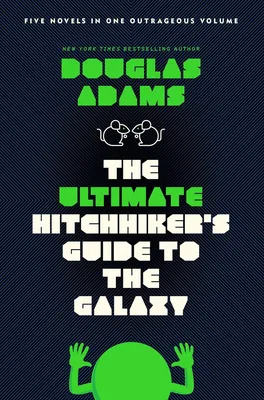
The Earth is demolished to make room for a hyperspace bypass. A man named Arthur Dent survives because his friend turns out to be an alien. They hitchhike across the universe and encounter a planet that manufactures other planets, a restaurant at the end of time, and the answer to life, the universe, and everything, which is 42. Adams writes absurdist comedy with such internal logical consistency that the universe he builds feels more rational than ours, which is both the joke and the point. There's a reason people have been reading this since 1979 and it still gets recommended every single time someone asks for something fun and weird.
Who it's for: Anyone who has ever stared at the ceiling and thought "nothing means anything" and wants a book that agrees but finds it hilarious.
2. Piranesi by Susanna Clarke
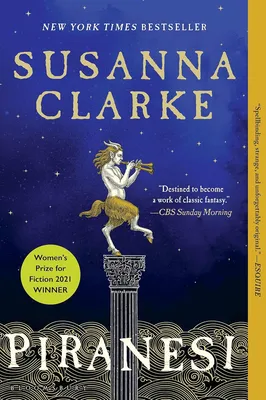
A man lives alone in a House. The House has hundreds of halls. The lower halls flood with tides. The upper halls have clouds. The walls are lined with marble statues, and he has learned the names and habits of every bird that nests in them. He keeps a journal, but the early entries suggest he may not fully understand his own situation. Clarke builds this world with such calm, specific detail that you don't question it — you just inhabit it alongside him, and the slow unraveling of what actually happened to him hits with a force that sneaks up on you completely.
Who it's for: Anyone who wants a short, gorgeous book they can lose themselves in completely and still be thinking about a week later.
3. Einstein's Dreams by Alan Lightman
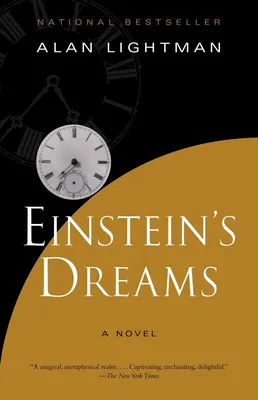
A series of thirty short chapters, each imagining a different version of time. In one world, time moves backward. In another, it flows faster near the earth's surface, so people build their cities on stilts to age more slowly. In another, there is no time at all — just a single moment, frozen forever. Lightman is a physicist at MIT, and this reads less like fiction than like someone's most beautiful fever dream. It's barely over a hundred pages. You can read it in one sitting. You might want to start over immediately when you're done.
Who it's for: Anyone who has ever had a long, strange dream about physics and wished they could stay in it.
4. Circe by Madeline Miller
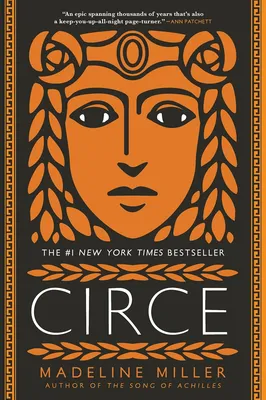
Circe is the daughter of Helios, god of the sun, raised in the halls of his underwater palace, largely ignored. She discovers she has power over transformation — plants, animals, men — and spends centuries honing it on her island while every god and hero in Greek mythology cycles through her life. Miller writes mythology as lived, sensory experience. Every herb and root in Circe's practice feels real and specific, and the visual world of ancient Greece she conjures is so physical that one reader described it like going through an entire movie while barely moving. The prose has a quality where you look up from the page surprised that you're still on your couch.
Who it's for: Readers who want lush, slow prose that wraps around you like weather.
5. Dungeon Crawler Carl by Matt Decker
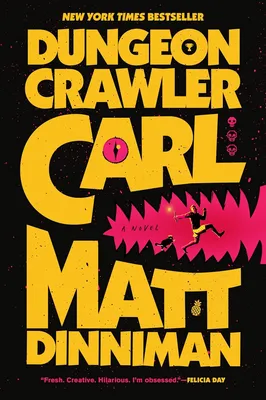
An alien species activates a death trap hidden beneath the Earth's surface, trapping the remnants of humanity underground in a literal dungeon that is also, somehow, broadcast as reality television to the rest of the galaxy. Carl and his roommate's ex-girlfriend's show cat Princess Donut descend floor by floor through increasingly insane game-show logic, accumulating weapons, crafting gear, and dealing with an audience of alien fans who love them. It's loud, fast, funny, and deeply committed to its own internal logic. Once it clicks, it's very hard to stop.
Who it's for: Anyone who has played a video game where you can't stop just doing one more floor.
6. Fear and Loathing in Las Vegas by Hunter S. Thompson
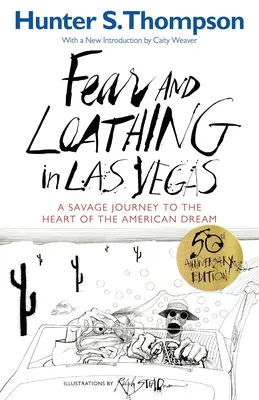
Thompson and his attorney drive to Las Vegas with a car trunk full of controlled substances to cover a motorcycle race and then a drug enforcement conference. He does not cover either one very thoroughly. What he does produce is one of the most relentlessly present, sensory, and unhinged pieces of American prose ever written. Reading it sober is an experience. Reading it in any other state raises serious questions about whether gonzo journalism was just a name for something we hadn't found the right vocabulary for yet. Raoul Duke's voice is so distinct and so overwhelming that the book feels like it's being shouted directly into your brain.
Who it's for: Anyone who enjoys chaos written with precision, and wants to be slightly unsure whether they're laughing or terrified.
7. The Fan Man by William Kotzwinkle
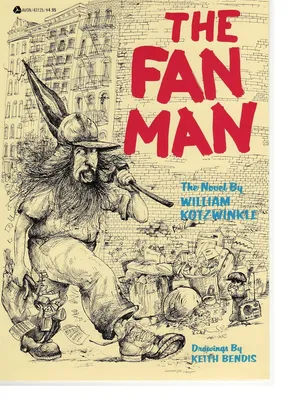
Horse Badorties is a twenty-year-old man living in a Manhattan loft so chaotic it may be sentient. He has hundreds of fans, perhaps thousands, creating a constant ambient drone. He collects musical instruments, teenagers, cats, and ideas in roughly equal measure. He wants to put on a Universal Love Concert. The plot is almost beside the point. Kotzwinkle writes the entire novel in Horse's stream-of-consciousness voice, which is simultaneously the most distractible and the most present narration in American literature. It was published in 1974, it's very short, and it remains one of the best-kept secrets in weird fiction.
Who it's for: Anyone who has ever had a train of thought that derailed seventeen times before completing a single sentence and felt completely at home there.
8. What Dreams May Come by Richard Matheson
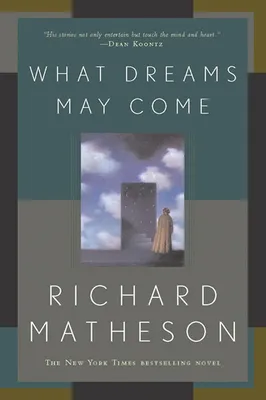
A man dies in a car accident and discovers that the afterlife is literally made of whatever you believe, whatever you imagine with enough conviction, becomes your reality. His heaven is built from the impressionist paintings his wife loved, and the colors there are described with an intensity that feels less like reading about pigment and more like experiencing light. When his wife, devastated by grief, dies by suicide and descends somewhere darker, he goes in after her. Matheson wrote this as a fully researched metaphysical novel, and the appendix citing his sources is genuinely interesting, but the novel itself is great.
Who it's for: Readers who want something that's genuinely trippy but also devastating.
9. Mort by Terry Pratchett
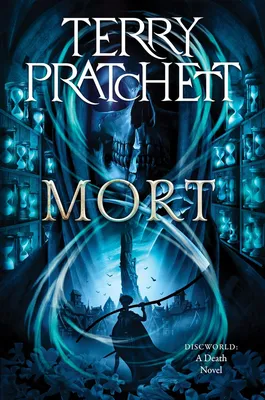
Death takes on an apprentice. The apprentice is a gangly, earnest teenager named Mort who is deeply unsuited to the work but gets the job anyway because nobody else showed up to the hiring fair. Pratchett's Discworld is a flat planet riding through space on the back of four giant elephants standing on a turtle, and the world operates on narrative logic rather than physics — things happen because stories demand them, not because of causality. Mort is a great entry point because Death is Pratchett's best character and because the novel never stops being funny for more than two pages at a stretch.
Who it's for: Anyone who wants something genuinely funny rather than something that is described as funny.
10. The City of Dreaming Books by Walter Moers
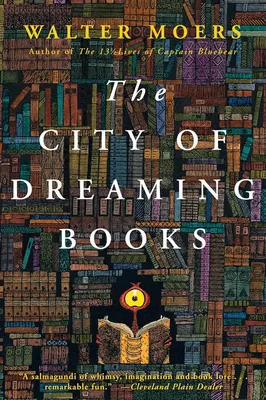
A young dinosaur poet inherits a manuscript so perfect it can't possibly exist, then descends into the Labyrinth beneath Bookholm — a city built entirely around books — to find its author. The Labyrinth is home to book hunters, Bookhunters (different), and creatures called Booklings that memorize single texts and recite them in caves. Moers created an entire continent called Zamonia and this is its most purely hallucinatory entry point. The illustrations are detailed, the prose is layered, and the density of invented culture is the kind you want to swim around in rather than just read through.
Who it's for: Readers who want to fall into a world so specific and strange that they forget the outside one exists.
11. Kaiju Preservation Society by John Scalzi

Giant monsters are real, they live in a parallel dimension, and there is a secret organization devoted to keeping them alive. A man who just lost his job delivering food for an app gets accidentally hired by this organization and starts working as a kaiju preserve volunteer. Scalzi writes dialogue the way Aaron Sorkin does — fast, funny, and character-specific — and the book moves at a pace that makes it easy to burn through in a single sitting. It's the most cheerful book on this list and does not apologize for it.
Who it's for: Anyone who needs something fun, propulsive, and guilt-free with absolutely no homework involved.
12. House of Leaves by Mark Z. Danielewski
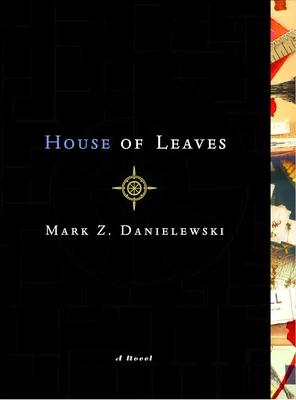
This one requires a different kind of altered state — not the cozy, flowing kind, but the kind where you're willing to be genuinely disoriented. A family moves into a house and discovers that its interior is larger than its exterior. An academic writes a lengthy analysis of a documentary about the house. A young man discovers the manuscript and begins annotating it in the margins. The book has footnotes that reference books that don't exist, passages in multiple languages, pages of text printed as spirals or mirrors, and sections where the house's measurements are described with the clinical precision of something trying very hard to seem measurable. People either love it the way they love very few things, or they bounce off it completely on page ten.
Who it's for: Readers who want their book to feel like the walls have quietly moved closer while they weren't paying attention.
Where to Start
If you want easy and fun, start with Hitchhiker's Guide or Kaiju Preservation Society. If you want something short and beautiful, Piranesi or Einstein's Dreams will do something to your brain that's hard to describe. If you want vivid and immersive, Circe is the pick.
The pattern across all of these is the same: they create a world specific enough that you can actually live in it while you're reading. That's not a high thing, exactly. That's just what the best books do. It's just easier to notice when you're paying attention.
Continue Reading
17 Horror Books You've Probably Never Heard Of
Forget Stephen King. Forget Nick Cutter. These are the horror books that even horror readers haven't found yet.
Best Books About Propaganda and Persuasion
These books explain how propaganda actually works — not as a crude lie you can spot from a mile away, but as something far more subtle and far more effective.