Book recommendations, reviews, and reading lists.

12 Books Like Project Hail Mary
2026-03-24 · Written by Josh

The Movie's Out. The Book Hangover Is Real. Here's What to Read Next.
The Project Hail Mary movie is finally here, and Ryan Gosling did something I wasn't sure was possible — he made Ryland Grace feel exactly right on screen. But whether you came to Andy Weir's story through the book first or walked out of the theater wanting more, the same problem exist: nothing quite scratches the same itch.
What made Project Hail Mary work was the combination of things that almost never show up together: high stakes, genuine warmth, laugh-out-loud moments, and a friendship between two beings who shouldn't be able to communicate at all but figure it out anyway. Rocky is the reason people cry at the end of this story. That tentative trust between species, built through music and math and sheer stubbornness. That's impossible replicate.
If you just watched Ryan Gosling try to save the world with astrophysics and an alien spider friend and you haven't read the book yet, start there. Weir's novel goes deeper into the science, the humor, and the emotional gut-punch of that ending. But if you've already read it and you're looking for what comes next, I've been through hundreds of reader recommendations to find the books that share Project Hail Mary's DNA — the intellectual joy, the optimism, the stakes, the warmth. None of them are Project Hail Mary. But they're some of the best reasons to keep reading.
1. We Are Legion (We Are Bob) by Dennis E. Taylor
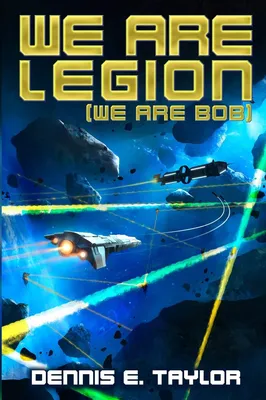
The Bobiverse series is the closest thing to Project Hail Mary that exists, and readers who loved one almost always love the other. Bob Johansson is a software engineer who dies, gets his consciousness digitized and uploaded into a space probe, and wakes up as an AI tasked with finding habitable planets for humanity. Taylor gives Bob the same self-deprecating wit, the same problem-solving joy, and the same tendency to think through everything out loud. The science is grounded, the stakes are real, and by book three you'll be deeply invested in a character who is technically not a person anymore.
Who it's for: Anyone who loved the "lone genius works through impossible problems while narrating his own thought process" structure of Project Hail Mary.
2. Children of Time by Adrian Tchaikovsky
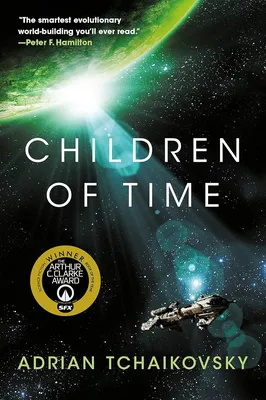
A dying human civilization sends ships toward the last terraformed planets. On one of those planets, an uplifting experiment has gone wrong — or right, depending on your perspective — and a civilization of intelligent spiders has spent thousands of years evolving, building, and developing their own culture. The alternating chapters between the spider civilization and the humans desperately trying to survive are where the book earns everything it's going for. The spider POV sections are some of the most ambitious worldbuilding in modern sci-fi, and the first-contact element hits the same notes as the relationship at the heart of Project Hail Mary.
Who it's for: Readers who wanted more time with Rocky and are ready for 500 pages of getting to know an even stranger alien civilization.
3. Hyperion by Dan Simmons
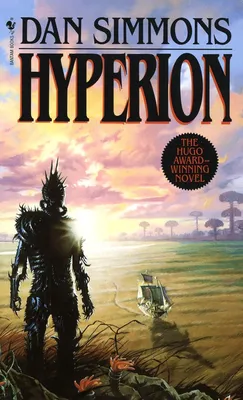
Seven pilgrims travel to a distant planet on a dangerous pilgrimage, and each one tells their story along the way. The structure is Canterbury Tales in space, but the content is something else entirely. Each story is a different kind of science fiction, braided together into something that works as a whole. The Shrike, a creature made of blades that exists outside of time, is one of the great monsters in the genre. Hyperion rewards patient readers who want scope and ambition alongside their sci-fi thrills.
Who it's for: Readers ready for something bigger and stranger, willing to work for payoff that arrives over multiple books.
4. The Martian by Andy Weir
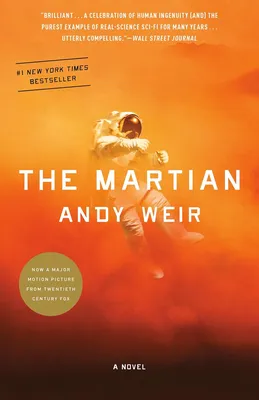
If you somehow came to Project Hail Mary without reading The Martian first, go back. Mark Watney is stranded on Mars after his crew evacuates and leaves him for dead. His only tools are botany, a lot of math, and the kind of optimism that refuses to acknowledge how bad things actually are. Weir wrote The Martian after Project Hail Mary in terms of when readers usually encounter it, but chronologically it's where he found his voice — the quippy, science-forward, relentlessly problem-solving protagonist who treats catastrophe like an interesting puzzle.
Who it's for: Anyone who hasn't read it yet, and anyone who wants to see where Ryland Grace's character voice came from.
5. Ender's Game by Orson Scott Card
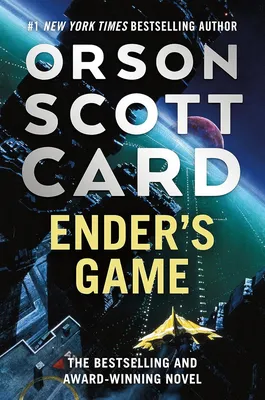
A child military genius is trained to fight an alien war he doesn't fully understand. The book is famous for its twist ending, but what makes it work is the slow build of Ender Wiggin as someone who has to think his way out of impossible situations — tactical, psychological, and social. Like Project Hail Mary, the intelligence of the protagonist is the engine of the story. The alien question — who are the Formics, what do they actually want — gets answered in later books in ways that reframe the whole series.
Who it's for: Readers who want the problem-solving and high-stakes structure but with more military strategy and moral complexity.
6. 11/22/63 by Stephen King
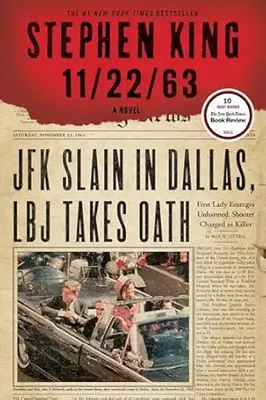
A high school teacher discovers a portal to 1963 and decides to use it to prevent the Kennedy assassination. The time travel mechanics are simple and strange, and King treats them with the same matter-of-fact rigor that Weir brings to astrophysics — here are the rules, here are the complications, here is what happens when you try to work around them. The book is much longer and slower than anything Weir has written, but the warmth of the protagonist and the genuine stakes make it feel like it belongs in similar company. Readers who wouldn't normally touch King's horror work consistently love this one.
Who it's for: Project Hail Mary readers who want something longer and more emotionally complex, willing to follow a character through five years of history.
7. Dungeon Crawler Carl by Matt Dinniman
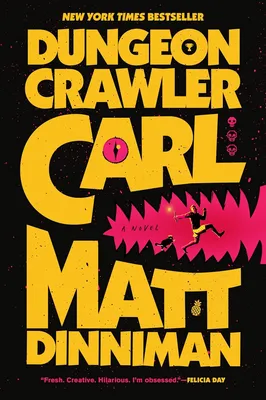
Aliens destroy Earth's surface and invite the survivors into a massive dungeon-crawl game show for the entertainment of the galaxy. Carl, a regular guy in boxer shorts, and his ex-girlfriend's cat Princess Donut have to fight their way through increasingly insane floors to survive. It sounds absurd because it is — but Dinniman commits to the premise so completely that the humor, the stakes, and the surprising emotional moments all land. Readers who love Project Hail Mary constantly recommend this series in the same breath, and the audiobook narration by Jeff Hays is almost universally considered one of the best in the genre.
Who it's for: Readers who loved Project Hail Mary's humor and want something that goes even harder on the comedy while keeping genuine stakes.
8. Old Man's War by John Scalzi
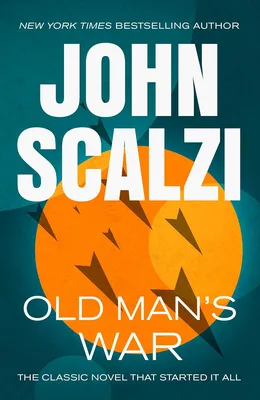
A 75-year-old man enlists in an interstellar military and gets a new, young body for the privilege. What follows is a military sci-fi novel that's more interested in the ethics and philosophy of what it's asking its soldiers to do than in the battles themselves. Scalzi writes with the same breezy, readable energy as Weir, and John Perry makes for an endearing protagonist — competent, funny, and genuinely trying to do the right thing in situations where that's not a simple concept.
Who it's for: Readers who want Weir's readable, character-forward style applied to a military sci-fi setting.
9. Starter Villain by John Scalzi

A substitute teacher unexpectedly inherits his uncle's supervillain empire — complete with volcano lair, genetically enhanced cats with a strong union stance, and enemies who don't care that he didn't ask for any of this. Scalzi wrote this as a love letter to Bond-villain absurdity, and it works because the premise is committed to completely. It's shorter than most of the other books on this list and much funnier, and it scratches the "competent protagonist dealing with an impossible situation while making jokes about it" itch directly.
Who it's for: Readers who specifically loved the levity in Project Hail Mary and want something that goes harder on the comedy.
10. Shards of Earth by Adrian Tchaikovsky
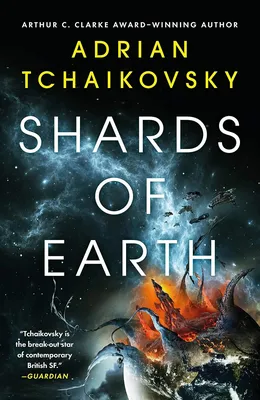
The first book in the Final Architecture trilogy. Humanity survived an encounter with planet-destroying alien entities called the Architects, but barely. Now a former soldier and a ragtag crew on a battered ship stumble into something that brings the Architects back. Tchaikovsky builds a genuinely diverse cast — different species, different political factions, different reasons to be on the ship — and uses the ensemble to explore a universe that feels fully populated. The Architects themselves are incomprehensible in the way the best sci-fi monsters are, and the first-contact question runs through all three books.
Who it's for: Readers who want the ensemble crew energy of a found family in space, with massive alien stakes and a bit of dry British humor.
11. A Long Way to a Small Angry Planet by Becky Chambers
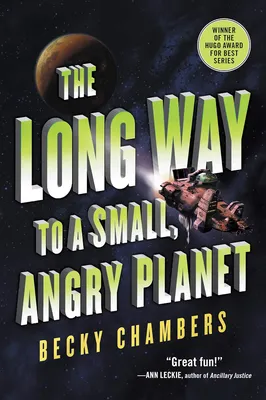
A crew of tunneling ship workers travels across the galaxy to drill a hyperspace route through a distant star system. Not much plot happens. A lot of everything else does. Chambers writes about ordinary people doing their jobs in space, and the worldbuilding comes through in how the characters relate to each other across species, cultures, and relationship structures. It's slower and warmer than anything Weir has written, but readers who responded to the friendship at the heart of Project Hail Mary tend to find what they're looking for here.
Who it's for: Readers who want the warmth and character-depth of Project Hail Mary's best moments, stretched across an entire slow-burning novel.
12. The Hitchhiker's Guide to the Galaxy by Douglas Adams
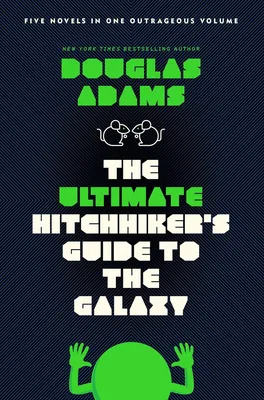
The OG sci-fi comedy, and it still holds up completely. Arthur Dent's house is about to be demolished. Then his planet is about to be demolished. His friend turns out to be an alien, and suddenly he's hitchhiking across the galaxy with a depressed robot, a two-headed president, and a book that has "DON'T PANIC" on the cover. Adams invented a tone that Andy Weir clearly inherited — the idea that the universe is vast and terrifying and also deeply, absurdly funny. If you've never read it, this is the foundation that books like Project Hail Mary are built on.
Who it's for: Anyone who hasn't read it yet. Seriously. And anyone who loved the humor in Project Hail Mary and wants to meet the book that made sci-fi comedy a legitimate genre.
Where to Start
If you just saw the Ryan Gosling movie and want the full story, read Andy Weir's novel first — the book goes deeper into the science, Rocky's communication system, and an ending the movie couldn't quite replicate on screen.
If you've already read Project Hail Mary and want the closest match, start with We Are Legion (We Are Bob) — same problem-solving wit, same science earnestness, same warmth. Readers who love one almost always love the other.
For the alien contact theme done at full scale, Children of Time gives you everything the Rocky relationship promised but across an entire civilization. For something that goes harder on the comedy, Dungeon Crawler Carl or Starter Villain will reset your brain completely.
The thing about Project Hail Mary — whether you experienced it through Andy Weir's pages or Ryan Gosling's performance — is that it's a story about how optimism and curiosity are survival tools. Every book on this list believes that too, even the ones that are much darker about it.
Continue Reading
Romance Books for Men (No Love Triangles, No Drama)
Romance recommendations for guys (and anyone else) who want a good love story without cheating, love triangles, or over-the-top drama. Just two real people figuring it out.
15 Dystopian Books That Aren't About Teenagers Saving the World
Love dystopian fiction but tired of every story being about a Chosen Teen? These 15 books feature adults dealing with collapse, surveillance, and survival without a single love triangle.