Book recommendations, reviews, and reading lists.

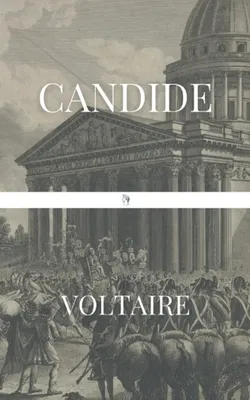
Candide
by Francois Voltaire
| Publisher | Penguin |
| Published | 1950-06-30 |
| Pages | 148 |
| ISBN | 9780140440041 |
| Categories | Fiction |
| Google Rating | 4/5 (25 ratings) |
What Readers Say
I’ve found that readers consistently grab onto two things: how shockingly fast this moves, and how the satire still lands nearly three centuries later. Voltaire wrote this in 1759 as a direct attack on philosophical optimism — the idea that we live in “the best of all possible worlds” — and he does it by throwing a painfully naive young man through an avalanche of wars, earthquakes, inquisitions, and pirate attacks, all narrated with a cheerfully matter-of-fact tone that becomes the joke itself. What surprises people most is that the humor doesn’t feel dated; one reader called it “satire that still lands,” and I keep seeing that echoed. The ending, where Candide finally abandons grand systems of thought and just decides to “cultivate our garden,” gets flagged as both a perfect deflating punchline and oddly practical life advice. As one person put it, nothing in the book is realistic, but everything in it is true.
The criticisms are few, mostly because expectations are properly set. Some readers who want psychological depth or character development won’t find it — this is a sprint, not a character study, and the relentless parade of disasters can feel repetitive if you’re not in on the joke. But for most, the brevity is a feature, and the book’s clarity and punch make it a common recommendation for anyone intimidated by classic literature. It’s under 150 pages and, as several readers note, easily finished in a single sitting, grabbing you from the first page without needing to warm up.
Who It’s For
If you’ve ever bounced off a classic because it felt like a months-long commitment, this is your book. I’d put it directly in the hands of anyone who loved the dark absurdism of Catch-22 or the sharp satirical bite of Animal Farm. Readers comparing it to Vonnegut aren’t off base — there’s a similar glee in dismantling grand ideas by showing them helpless against actual human suffering. It’s perfect for the person who says “I want to read more classics but I need something that moves” — it’s regularly recommended alongside The Metamorphosis and The Old Man and the Sea in exactly that category of short, immediately gripping works. If you’ve got three hours and you want a book that will make you laugh while also making you think about optimism and cruelty, this is it.
Reading Context
I often see Candide paired with Catch-22 and Slaughterhouse-Five when readers build lists of satirical, anti-war, fast-paced classics. It fits neatly into a picaresque tradition, so Joseph Andrews by Fielding is another natural companion, and it’s frequently taught in literature surveys alongside the Enlightenment philosophers it mocks. Many readers recommend picking up a critical edition — the Norton or Bedford editions come with scholarly essays that unpack the historical context and different schools of literary theory, which is fantastic if you want to squeeze more out of a second read. Before you start, the only thing worth knowing is that Voltaire was responding directly to Leibniz’s philosophy, which argued that a perfect God must have created the best possible world. Watching Voltaire systematically demolish that idea with absurd catastrophe is the whole point. No adaptation is a must, but the book is so self-contained and swift that you don’t need any supplementary material to enjoy it — just a tolerance for cheerful, cynical humor.