Book recommendations, reviews, and reading lists.

Best Classic Books That Aren't Dense (Or Boring)
2026-04-12 · Written by Josh
The Part Where I Admit I've Never Finished Ulysses
Nobody has. I mean, some people have. They seem fine. But I've started it three times and each time I get about 40 pages in and think: I could be having a good time right now. I could be reading something that actually wants to be read.
Here's the thing nobody says out loud about classic literature: a lot of it is genuinely accessible. Not dumbed down, not lightweight — just written for humans. The gatekeeping happens when we lump every book published before 1960 into the same category as Ulysses and Remembrance of Things Past, and then act surprised when people bounce off "the classics."
The books on this list are classics by every meaningful definition — enduring themes, cultural weight, the kind of writing that holds up across decades — but they're also books that don't require a reading group or a Sparknotes tab to get through. Some are under 200 pages. Most can be finished in a weekend. None of them will make you feel stupid.
If you've been meaning to read more classic literature but keep getting derailed, start here.
1. Animal Farm by George Orwell
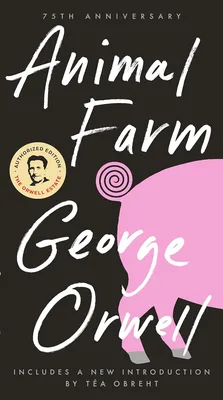
Orwell wrote this in 1945 as a direct allegory for the Soviet Union, but the book is so economical and precise that it transcends the specific history it's skewering. It's 112 pages. The prose is clean and almost deceptively simple — Orwell was doing something much harder than it looks. The satire lands because he lets the story do the work, without stopping to explain the joke.
What makes it readable: there's actual narrative momentum. The farm descends into authoritarianism in stages, and each stage feels both inevitable and infuriating in a way that's more effective than any lecture. By the end, you understand something about power and corruption that you couldn't have gotten from a political essay.
Who it's for: Anyone who bounced off Orwell's longer work or who wants to understand why Animal Farm keeps getting banned.
2. Of Mice and Men by John Steinbeck
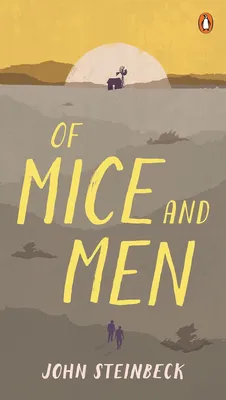
One of those books that hits differently than you expect. You know it's a tragedy going in — everyone who's ever mentioned it to you has the look of someone who survived something — but the shortness of it (under 130 pages) makes the emotional impact almost disorienting. There's no padding. Every scene is doing work.
Steinbeck was capable of enormous sprawl (East of Eden, The Grapes of Wrath), but here he writes like a playwright, with almost no wasted movement. The friendship between George and Lennie is specific and real in a way that most novels three times its length can't manage. You'll think about it for a week after you finish.
Who it's for: Readers who want Steinbeck without committing to 600 pages, and anyone who wants to cry on a train without drawing too much attention.
3. The Old Man and the Sea by Ernest Hemingway
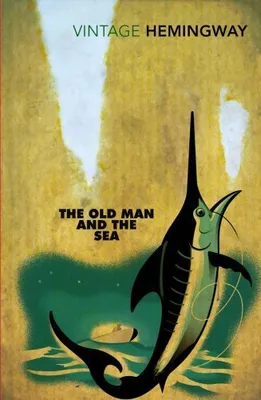
Hemingway can be a polarizing writer if you start in the wrong place. A Farewell to Arms loses people; The Sun Also Rises loses others. But The Old Man and the Sea is the distilled version of everything he was trying to do, and it's 127 pages, and it's about an old fisherman wrestling a giant marlin in the Gulf Stream and also about everything else at the same time.
The prose has that famous iceberg quality — spare on the surface, carrying enormous weight underneath. What looks like a simple story about fishing is actually about dignity, defeat, age, and what it means to do something well when no one is watching. The ending is one of the most quietly devastating in American literature.
Who it's for: People who want to understand why Hemingway mattered, and anyone who's ever failed at something enormous and still felt proud of the attempt.
4. The Stranger by Albert Camus
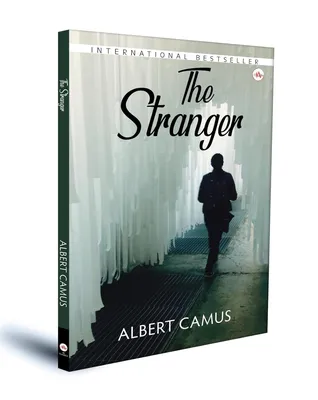
The Stranger is short (under 160 pages), fast, and genuinely strange in a way that rewards rereading. Meursault is one of literature's most unsettling protagonists — not because he's evil, exactly, but because he's almost completely disconnected from the emotional framework the people around him expect him to operate within. He doesn't grieve his mother. He doesn't understand why he's supposed to.
Camus wrote this as an entry point to his philosophy of absurdism, but it works just as well if you come to it with no philosophical background whatsoever. It reads like a crime novel that slowly turns into an existential argument, and by the end you're not sure whether Meursault is a monster or the only honest person in the book.
Who it's for: Readers drawn to dark, philosophical fiction who want something they can finish in a sitting or two.
5. Slaughterhouse-Five by Kurt Vonnegut
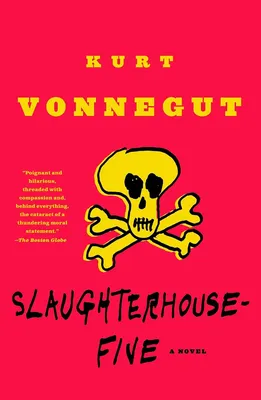
Most Vonnegut is accessible, but Slaughterhouse-Five is the one that hits hardest and stays longest. It's about Billy Pilgrim, a World War II soldier who survives the firebombing of Dresden and becomes unstuck in time — living moments from his life out of sequence, including visits to the alien planet Tralfamadore. It's also one of the most antiwar novels ever written, which is not something you'd guess from that description.
Vonnegut's voice is the thing. He's funny and sad and deeply humane, and he never wastes words. The book loops back on itself — time is the point — and each loop reveals something new. "So it goes," the refrain that appears every time someone dies, starts as a dark joke and becomes something more devastating by the end.
Who it's for: Anyone who loved Catch-22 but wants something shorter, and readers who are skeptical that a book involving aliens can be a serious antiwar novel.
6. The Great Gatsby by F. Scott Fitzgerald
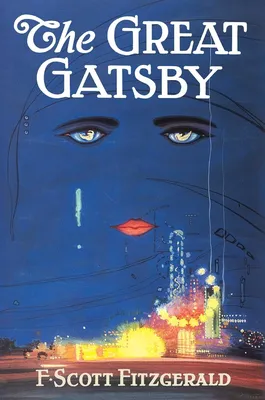
Yes, I know the Reddit source material listed Fitzgerald in the "didn't like" column. And I get it — he can feel airless and fussy if you're not in the right mood. But Gatsby is worth defending specifically because it's so short (around 180 pages) and so precise. Fitzgerald is doing something structurally interesting: writing a tragedy through a narrator who doesn't quite understand what he's witnessing.
The green light, the parties, the Valley of Ashes — these images accumulate into something bigger than any of them individually. The prose is lush but purposeful, and the whole thing moves quickly enough that it doesn't overstay its welcome. If you bounced off it in high school, try it again as an adult. It reads differently when you've actually watched someone self-destruct over something they never really had.
Who it's for: Readers who want to understand the American Dream as tragedy, and anyone who struggled with it at 16 and wonders if their teacher ruined it.
7. Rebecca by Daphne du Maurier
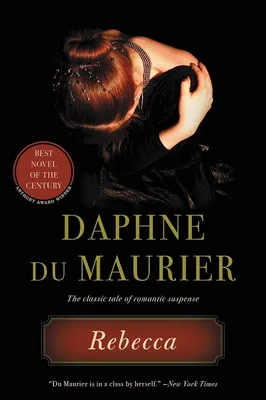
Rebecca doesn't get classified as a classic often enough, which is a shame because it's doing something genuinely sophisticated under its gothic thriller surface. The unnamed narrator marries a wealthy widower and moves into his enormous Cornish estate, where she is slowly consumed by the memory of his first wife, Rebecca — beautiful, magnetic, dead.
Du Maurier wrote it in 1938 and it holds up completely. The psychological intensity builds steadily, the atmosphere is thick enough to cut, and the first sentence ("Last night I dreamt I went to Manderley again") is one of the best opening lines in the English language. It's suspenseful in the way the best classics are — not because of what happens, but because of what might happen.
Who it's for: Readers who want gothic atmosphere and psychological suspense without reading something that requires footnotes.
8. The Strange Case of Dr. Jekyll and Mr. Hyde by Robert Louis Stevenson
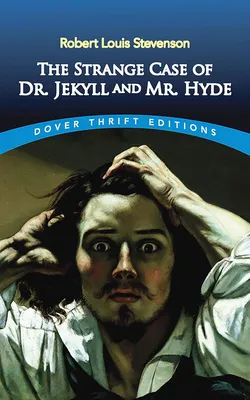
This one routinely surprises people who assume they already know it. Most people have absorbed the Hyde-is-evil, Jekyll-is-good version through pop culture, but Stevenson's actual novella is more complicated than that — Hyde isn't just evil, he's the liberated version of Jekyll, the self that was suppressed by Victorian respectability. The horror is that Jekyll likes it at first.
It's a novella, which means you can read it in a single afternoon. The prose is Victorian but not dense — Stevenson was primarily a storyteller, not a stylist, and the pacing is relentless. If you go in knowing the twist, you can spend the whole time watching how elegantly Stevenson builds to it.
Who it's for: Anyone interested in the psychology of the double, and readers who want a genuinely unsettling Victorian horror story that's also actually brief.
9. Candide by Voltaire
Candide is satire from 1759 that somehow still lands. Voltaire wrote it as an attack on the philosophical optimism of his era — specifically the idea that we live in "the best of all possible worlds" — and he did it by sending a naive young man through a series of increasingly catastrophic events: wars, earthquakes, inquisitions, slave ships, pirate attacks. The tone is relentlessly cheerful in the face of pure horror, which is the joke.
It's under 150 pages and moves at a sprint. Nothing in it is realistic, but everything in it is true. The ending, where Candide abandons grand philosophy and decides to just "cultivate our garden," is both a deflating punchline and genuinely good advice.
Who it's for: Readers with a dark sense of humor, and anyone who wants to see how 18th-century satire compares to modern absurdist comedy (the answer: surprisingly well).
10. The Good Earth by Pearl S. Buck
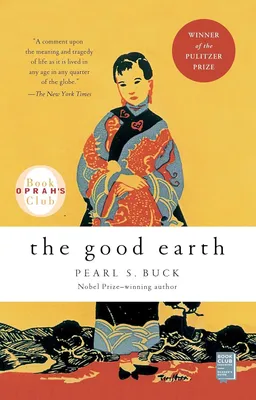
Buck won the Nobel Prize partly on the strength of this book, and it's one of those novels that expands in your memory after you finish it. It follows Wang Lung, a Chinese peasant farmer, across his entire life — from desperate poverty through success, aging, and everything in between. The prose is simple and biblical in rhythm, and the connection between the man and his land becomes increasingly symbolic without ever feeling heavy-handed.
It's unfairly forgotten in conversations about classic American fiction, probably because it's set in China and most "classics" lists skew heavily Western. But it's genuinely accessible, genuinely humane, and genuinely good. One of the more underrated entries in the 20th-century canon.
Who it's for: Readers who want an epic family saga without the page count, and anyone interested in early 20th-century fiction that actually looks beyond Europe and America.
11. The Remains of the Day by Kazuo Ishiguro
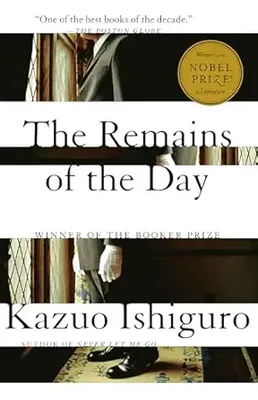
Ishiguro published this in 1989, so whether it counts as a "classic" depends on your definition. I'll include it because it's already that — the kind of book that people who love books keep pushing on other people. It follows Stevens, an aging English butler, on a road trip through the English countryside, narrating his decades of service with a very careful, very polished, very controlled voice. What he's actually narrating, without quite knowing it, is a life's worth of repression and regret.
The restraint is the point. Stevens can't say what he means. He can barely admit what he feels. Ishiguro uses that restraint to devastating effect — the gaps in Stevens' narration are where all the emotion lives. It's one of the quietest heartbreaking novels I've read, and it's completely approachable if you come to it without expectations.
Who it's for: Readers who want emotional impact delivered through understatement rather than melodrama, and anyone who wants to understand what "showing not telling" looks like at its best.
12. Flowers for Algernon by Daniel Keyes
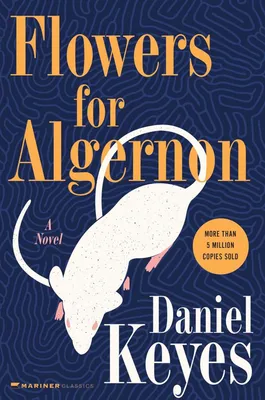
Originally published as a short story in 1959 and expanded into a novel in 1966, this is one of the few books where the gimmick is also the depth. Charlie Gordon, an intellectually disabled man, becomes the subject of an experimental surgery that dramatically increases his intelligence — and the novel is told entirely through his journal entries, so you watch his grammar, vocabulary, and self-awareness transform in real time as his IQ climbs. Then it starts going the other way.
It's a science fiction premise with the emotional weight of literary fiction. The question it asks — what makes someone a person? what is lost when we try to "fix" someone? — is handled without sentimentality or easy answers. The ending is genuinely gutting. This is one of those books I hand to people who say they don't like classics.
Who it's for: Readers who want science fiction with genuine literary ambition, and anyone who wants to cry but in a way that feels earned.
13. To Kill a Mockingbird by Harper Lee
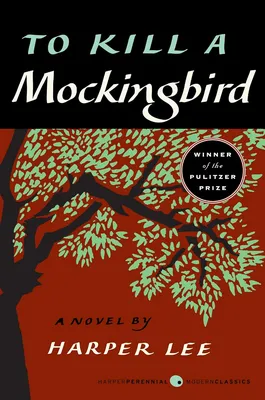
The most-assigned novel in American high schools, which is partly why it gets dismissed. But come back to it as an adult and it's a different book. The Southern childhood atmosphere is extraordinary — Lee writes Scout's perspective with a specificity that makes the world feel completely real. The courtroom sequences are gripping in the way good legal drama always is. And Atticus Finch is one of the most fully realized father figures in American fiction.
The racial politics have been debated extensively and fairly; the novel is a product of its moment and has real limitations. But as a piece of writing — voice, structure, character, sense of place — it earned its place. It's also genuinely accessible, which is not an insult.
Who it's for: Readers who were assigned it at 13 and remember nothing except the bird metaphor, and anyone who wants Southern Gothic atmosphere without the Southern Gothic darkness.
Where to Start If You've Never Read a Classic
If you're new to classic literature and want a genuine entry point, I'd start with Animal Farm or Slaughterhouse-Five. Both are short enough to finish in a weekend, both have strong narrative pull that doesn't let up, and both will leave you understanding why these books endure.
From there, The Stranger and Of Mice and Men are natural next steps — slightly longer, slightly more demanding, but still built to be read, not survived. If you find yourself drawn toward the gothic end of this list, Rebecca and Dr. Jekyll and Mr. Hyde are close to purely pleasurable in a way that not all classics allow themselves to be.
The point isn't to work your way through a syllabus. It's to find the ones that pull at you and follow where they lead. One good classic will send you toward three others, and before you know it you're actually that person who reads classic literature, which is a fine and harmless thing to be.
Continue Reading
Best Love Stories: Books That Actually Earn the Feeling
The best love stories aren't about falling in love — they're about what love costs, what it survives, and what it does to you. Here are the ones that actually earn the feeling.
Best Japanese Classic Books to Read Before You Die
Pre-1980s Japanese literature is some of the most psychologically rich fiction ever written — alienation, beauty, shame, and the strange tension between tradition and modernity. Here's where to start.