Book recommendations, reviews, and reading lists.

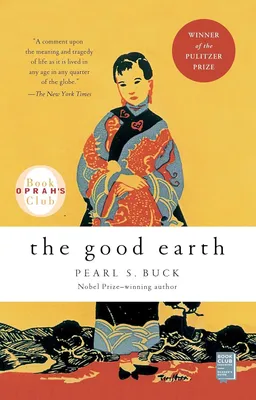
The Good Earth
by Pearl S. Buck
| Publisher | Washington Square Press |
| Published | 2020-06-02 |
| Pages | 384 |
| ISBN | 9781982147174 |
| Categories | Fiction |
What Readers Say
I’ve noticed readers consistently describe this book as one that quietly reshapes how they see the world—specifically, how they define success and fulfillment. One reader put it plainly: it unraveled the idea that success means being loved or valued by someone else, a lesson that hit especially hard for those raised with that pressure. That raw, almost uncomfortable clarity is what sticks with people. It’s not flashy or didactic; it just shows you a life and lets the implications sink in over time.
The writing itself lands as a pleasant surprise for a book often shelved as a “classic.” I see it recommended over and over as proof that literary merit doesn’t require dense, inaccessible prose. The story flows with a straightforward, almost fable-like rhythm that makes it easy to enter but impossible to exit without feeling the full weight of its themes. There’s a universality here that readers in 2021 found just as resonant as those in 1931—the depiction of a family navigating ambition, pride, and hardship in a Chinese village reads, to many, like a mirror held up to human nature everywhere.
Common criticisms are hard to pull from these mentions, but the emphasis is rarely on flawless characters. What people praise is Buck’s unflinching look at how terrible and wonderful we all can be, particularly within the bonds of family. It’s the kind of book that earns its place on “embarrassing not to have read” lists not for its prestige, but because it delivers a deeply personal wake-up call that stays lodged in the conscience.
Who It's For
This is for readers who love sprawling intergenerational family epics but want them grounded in stark, personal stakes rather than sweeping political statements. If you were engrossed by the family sagas in Pachinko by Min Jin Lee or Homegoing by Yaa Gyasi—books that trace lineage and legacy through tough, often unforgiving choices—you’ll find The Good Earth hitting that same nerve. It’s also a strong pick for anyone who appreciated the economic struggles and quiet dignity in Steinbeck’s The Grapes of Wrath, though Buck’s story unfolds on a more intimate, farm-level scale.
I think it’s particularly suited for readers ready to question what they’ve been taught about ambition and worth. If a book like East of Eden resonated with you for its moral weight and examination of human capacity for both good and evil, Buck’s novel offers a similar philosophical gut punch through a very different cultural lens.
Reading Context
This consistently appears alongside other accessible classics like The Great Gatsby, Slaughterhouse-Five, and Of Mice and Men on reading lists, which tells me it’s a gateway book—one of those novels you might get assigned in high school and end up genuinely enjoying. It sits comfortably in the canon of early 20th-century literature that bridges the personal and the epic, often read as an entry point to broader discussions about agrarian life and social change. There’s a film adaptation from 1937 worth knowing about, though the consensus among readers I see is that the book itself holds the raw power.
Before you start, know that this isn’t a romance or a story about finding lasting happiness through relationships—one reader explicitly recommended it to someone seeking a narrative where a woman’s life doesn’t hinge on a partner. Go in ready for a slow-burn meditation on land, legacy, and the quiet cost of survival. It pairs well with other works that strip characters down to their essential drives, and I’d suggest reading it when you’re in a reflective mood, willing to sit with difficult, enduring truths.