Book recommendations, reviews, and reading lists.

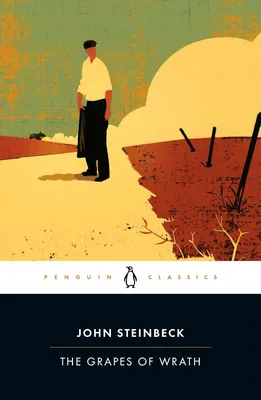
The Grapes of Wrath
by John Steinbeck
| Publisher | Penguin Group |
| Published | 1976 |
| Pages | 596 |
| ISBN | 9780140042399 |
| Categories | Fiction |
What Readers Say
I’ve never seen another novel that hits like this one — readers consistently describe it as a freight train that just doesn’t let up. The structure is a huge part of that power: Steinbeck alternates between the intimate story of the Joad family and wider, almost documentary-style interlude chapters that show the whole system breaking. One reader said it felt completely on the nose about what America is still dealing with nearly a century later, and that’s exactly why it hurts. The passages detailing crops destroyed while people starve — kerosene sprayed on oranges, pigs slaughtered and buried — get quoted over and over again, because they turn economic cruelty into something you can taste and smell. That relentlessness is why people call it their favorite novel, or the highest peak in all of literature.
Readers are just as moved by the characters. Ma Joad holding the family together, Tom’s dawning radicalism, Rose of Sharon’s final act of desperate generosity — even side characters like Al and Noah feel like fully real people. People talk about that ending as one of the most perfect in fiction, turning the most degrading situation into a source of stubborn, almost unbearable hope through an act of pure love. The line that gets cited most captures the whole ethos: “The quality of owning freezes you forever in ‘I,’ and cuts you off forever from the ‘we.’” It’s that shift from isolation to solidarity that leaves readers wrecked.
Who It's For
This is for the reader who wants to be wounded and stabbed — Kafka’s kind of book. If you loved East of Eden but sometimes felt it meandered, The Grapes of Wrath is the tighter, more punishing version of Steinbeck’s genius. It’s for people who see literary fiction as a form of mutual aid, a way to build empathy for those crushed by class exploitation and racism. One reader said it changed how they look at farmers forever; another called it an antidote to the divisiveness of social media.
Think of it as a corrective to any lingering self-reliance fantasies: it forces you to see that we’re all in this together. If you’re drawn to American novels that dismantle the myth of individualism — something like Huckleberry Finn or The Jungle — this belongs on your shelf. Be warned: the message isn’t subtle. Steinbeck isn’t afraid to preach, and that’s exactly why it works for readers craving fiction that actually says something.
Reading Context
Most readers come to this through the Steinbeck gateway, and they often pair it with East of Eden — many consider those two the absolute peak of his work. Some even suggest starting here if you’re new to him. Of Mice and Men gets mixed reactions by comparison, with some saying it doesn’t hit nearly as hard. Beyond Steinbeck, it shows up on lists alongside The Great Gatsby, Catch-22, and even Bonfire of the Vanities as one of the essential novels for understanding how America got this way — a syllabus of disillusionment.
It’s a classic that serious readers eventually circle around, the sort of book English majors regret skipping. If you’re trying to read about the United States honestly, looking its cruelties straight in the face, you’ll find it placed next to The Adventures of Huckleberry Finn as a foundational text. The famous film adaptation doesn’t get much mention among these readers, which tells you something: this is a book whose power lives entirely on the page, in its unflinching language and in the growing wrath of its people.