Book recommendations, reviews, and reading lists.

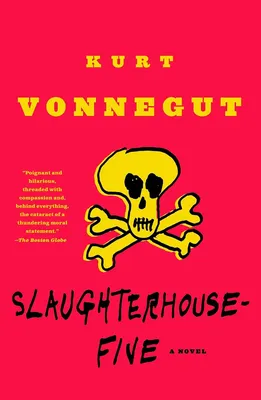
Slaughterhouse-Five
by Kurt Vonnegut
| Publisher | Dial Press Trade Paperback |
| Published | 1999-01-12 |
| Pages | 289 |
| ISBN | 9780385333849 |
| Categories | Fiction |
| Google Rating | 5.0/5 (1 ratings) |
What Readers Say
I've seen this book do something to people that few others can. Readers keep coming back to it, re-reading it more than any other book they own, because it makes them feel things they didn't know were there. The language is famously simple and short—one commenter nails it as "incredible depth" with "simple language"—but that's exactly what lets the emotional payload land. The famous backwards-war passage, where bullets are sucked out of pilots and fires shrink into bomb casings, gets quoted in full in threads, not just because it's clever, but because it forces you to see the Dresden firebombing through a lens of impossible healing. That yearning for reversal, for things to be made whole, sits under everything.
The refrain "So it goes" becomes a kind of secular prayer for people going through heavy life crises. I notice readers who mention bipolar depression, extreme work pressure, or a loss of religious structure say this book helped them rebuild their sense of what matters. One reader says Vonnegut helped them move out of childhood indoctrination and rebuild a reality around humanity. The deep loneliness and absurdism of Billy Pilgrim's time-skipping feels less like science fiction and more like an honest map of PTSD, and people seem to value that raw acknowledgment. What surprises many is how funny it is while being this dark—the money tree that lures humans to kill each other for fertilizer is tossed off in a single, perfect sentence, and the cynical critic lines about novels existing to "provide touches of color in rooms with all-white walls" or "describe blow-jobs artistically" cut right through any pretension.
Who It's For
This is for readers who want literature that asks enormous existential questions without making you feel like you're drowning in dense prose. If you've ever been shamed for asking "Why are we here?" in an American writing workshop, as Ocean Vuong noted, this book is your permission slip. It's for people who love Dostoevsky's sincere grandness but need something you can read in a single camping trip. It's for those in the middle of a life crisis—loneliness, depression, losing a belief system—who need the mantra "Everything was beautiful, and nothing hurt" carved into them. Fans of The Handmaid's Tale, Brave New World, and speculative fiction that's secretly just the real world with the mask off will find their home here. I'd hand this to anyone who thinks literary fiction has to be difficult to be good.
Reading Context
You'll often find it shelved alongside other banned books—Brave New World, The Outsiders, Cat's Cradle—and that shared rebellion is part of its energy. It's frequently mentioned in the same breath as other Vonnegut novels, especially Mother Night for its moral complexity and The Sirens of Titan for its world-shifting perspective. Knowing that Vonnegut himself survived the Dresden bombing as a POW roots the absurd time-travel and Tralfamadorian aliens in a very real trauma, so I'd go in understanding this is fictionalized autobiography. If you're looking for a book to pair it with, Ocean Vuong's work or The Brothers Karamazov make for fascinating conversation partners, especially around the function of a novel in modern life. Just don't expect a neat linear path—this one works best when you let it wash over you and then sit with what's left behind.