Book recommendations, reviews, and reading lists.

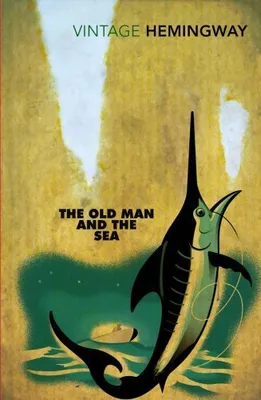
The old man and the sea
by Ernest Hemingway
| Publisher | Hueber Verlag |
| Published | 1975 |
| Pages | 68 |
| ISBN | 9783190001507 |
| Google Rating | 4/5 (91 ratings) |
What Readers Say
What strikes me most about how readers talk about this book is the quiet, steady reverence. The word "meditative" comes up again and again — this isn't a story that grabs you by the throat with plot twists, but one you slip into, even when your mind is tired. A reader going through a hard season described it perfectly: it's "comforting without being sentimental, meaningful without being heavy." That balance is the thing. Hemingway's prose is stripped to the bone here, and readers consistently point to the famous line "A man can be destroyed but not defeated" as the core of what lingers — not a triumphant action-hero moment, but a quiet dignity in the struggle itself. There's no heavy subject matter in the sense of trauma or tragedy for its own sake; it's just an old man and a fish, and somehow it becomes about everything else at the same time.
The only real caution I see isn't a criticism so much as a heads-up: you'll need some patience. It's barely a hundred pages, but it's not action-heavy. One reader noted, "You will need a bit of patience for it since, despite being just about 100 pages long, it's not action-heavy (quite meditative actually)." That meditative quality is precisely why so many find it absorbing when life feels overwhelming. A good number of readers mention they first encountered it too young — "Most of us read that far too young" — and I think that's telling. It's a book that seems simple on the surface, but the resonance deepens when you've accumulated some of your own losses and quiet battles. It surprises people with how much it offers in such a small package, which is why it's so often called a perfect entry to classic literature.
Who It's For
If you loved the fable-like simplicity of The Pearl or the allegorical weight of Animal Farm, this will feel like a natural companion. Readers frequently pair it with those, alongside The Alchemist and Jonathan Livingston Seagull — stories that operate on a mythic, stripped-down level. It's for anyone who found Life of Pi's man-against-nature survival psychology compelling but wants something even more distilled. I'd hand this to someone who bounced off A Farewell to Arms or The Sun Also Rises and thought Hemingway wasn't for them; this is the concentrated version of everything he was trying to do, without the sprawling cast or dialogue that can lose people. You want a classic that doesn't feel like homework? This is it. It's also a book that works remarkably well when your concentration is fragile — whether because of grief, exhaustion, or just a low-energy season. The language never fights you, but it gives you something solid to hold onto.
Reading Context
Readers often reach for this alongside Steinbeck's short works — The Pearl and Of Mice and Men come up constantly in the same breath, and Voltaire's Candide rounds out a perfect trio of compact, philosophical reads. Within Hemingway's own body of work, this is the gleaming centerpiece: the one that earned him the Pulitzer and was cited when he won the Nobel. No prior knowledge needed, and there's no tricky modernist technique to decipher — just clear, beautiful language. It's frequently recommended as a one-sitting read (around three hours at a normal pace), but I'd say it's best absorbed slowly, letting the rhythm of the old man's thoughts wash over you. One reader mentioned it's great even when slightly high, which makes sense — it has a hypnotic, sensory quality. If you want to continue in that vein, you might follow it with The Stranger in the Woods for isolation and introspection, or Moby-Dick if you're ready for obsession on a grander scale.