Book recommendations, reviews, and reading lists.

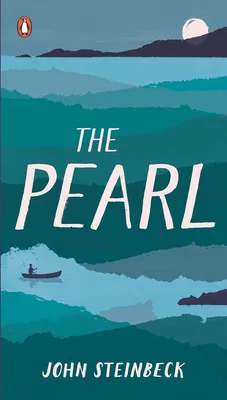
The Pearl
by John Steinbeck
| Publisher | Spark Notes |
| Published | 2002 |
| Pages | 76 |
| ISBN | 9781586634513 |
| Categories | Literary Criticism |
What Readers Say
I’ve noticed that readers consistently describe The Pearl as a story that pulls you in with its simple, desperate premise—a father diving for a pearl to save his stung child—and then wrenches everything sideways. What starts as a hopeful fable about beating the odds becomes this chilling meditation on greed and fear. One reader, a new father himself, pointed out how relatable Kino’s sudden ambition felt: you’re just trying to secure a better future for your family, and then the very thing that promises salvation starts attracting envy, manipulation, and violence. The pearl turns from a miracle into a curse so naturally that it leaves you unsettled, and that shift is what people can’t stop thinking about.
The ending is where most of the strong reactions land. A lot of readers first encountered this book in middle school, and they remember feeling confused and just deeply sad—that specific kind of ache that takes years to fully unpack. It’s often compared to the ending of Of Mice and Men in how it delivers a gut punch that sits with you. What surprised me across the mentions is how much the story grows with you: what read as a straightforward tragedy in school reveals layers about colonialism, economic traps, and the weight of trying to break a cycle when the whole system is rigged against you. The brevity only concentrates that impact; as one reader put it, it’s perfect for a single sitting, but you’ll spend much longer digesting it.
Who It’s For
This is for readers who want a classic that does a lot in very few pages—think The Old Man and the Sea in its parable-like intensity, or Steinbeck’s own Of Mice and Men in its tragic intimacy. If you’re at a point in life where the tension between ambition, family duty, and the fear of losing what you have feels especially real, this book will land hard. It’s also an ideal entry point if you’ve been intimidated by Steinbeck’s longer works like East of Eden or The Grapes of Wrath; here you get his empathy for the struggling and his unflinching look at human greed in one compact, devastating dose. Readers who appreciate being left with moral questions rather than tidy answers will feel right at home.
Reading Context
The Pearl often gets grouped with other short, teachable novellas—Candide, The Old Man and the Sea, Of Mice and Men—and it’s commonly assigned in school, though many find its themes deepen with adulthood. I’d recommend reading it in one go, ideally in a quiet stretch where you can let the accumulating dread settle. If you’re pairing it with something, the Hemingway and Steinbeck connections are the natural path; going from this to Of Mice and Men highlights how both stories use a tight, fable-like frame to explore impossible dreams. Going in, know that this is a parable, not a novel that rewards you with relief. Its power comes from the way it strips hope down to a hard, discomforting truth, and that’s exactly why readers keep revisiting it.