Book recommendations, reviews, and reading lists.

Fear and Loathing in Las Vegas
by Hunter S. Thompson
| Publisher | Vintage |
| Published | 1998-05-12 |
| Pages | 225 |
| ISBN | 9780679785897 |
| Categories | Biography & Autobiography |
What Readers Say
People who encounter this book young tend to describe it as formative in a way that's hard to shake. The writing itself is the point — Thompson's voice is so relentlessly present, so sensory and unhinged, that it overwhelms everything around it. Readers consistently reach for the word "power" when they talk about it: the power of the prose, the power of gonzo journalism as a form, the way it makes you feel like something is being shouted directly into your brain. That's not hyperbole — that's the recurring note.
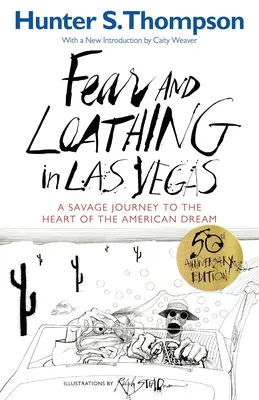
The pushback is real and worth naming. Some readers came to it hoping to feel happy and alive, and instead felt the anxiety and dread that the title promises. The illustrations don't help if you're wired that way. It's a book that rewards a certain mood and can punish the wrong one. People also debate whether Thompson invented something genuinely new or just gave a name to something that didn't have language yet — and that's a debate worth having rather than papering over.
What surprises readers most is how literary it is. It gets lumped in with psychedelic reads and stoner picks, but the mentions that land hardest are the ones that place it alongside Moby Dick and The Great Gatsby as attempts at the Great American Novel — a chronicle of personal disillusionment and the pursuit of unworthy dreams. That framing makes it stranger and more interesting than the "drug book" reputation suggests.
Who It's For
This one is for readers who are drawn to voice above everything else — the kind of person who'll follow a narrator anywhere as long as the sentences are doing something extraordinary. If you read On the Road and wanted it looser and more unhinged, or if you've ever wondered what New Journalism looks like when it fully dissolves into fiction, this is where that experiment peaks.
Reading Context
The natural pairing here is On the Road — both are American novels about chasing something that turns out not to be worth catching, and both are rooted in a specific moment of national mythology. If you want to go deeper into Thompson's work, this is the entry point; everything else he wrote is easier to understand once you've heard Raoul Duke's voice. The Terry Gilliam film adaptation with Johnny Depp and Benicio del Toro is genuinely good and unusually faithful, but I'd read the book first — the prose is the thing, and no film can carry it the same way.