Book recommendations, reviews, and reading lists.

Oryx and Crake
by Margaret Atwood
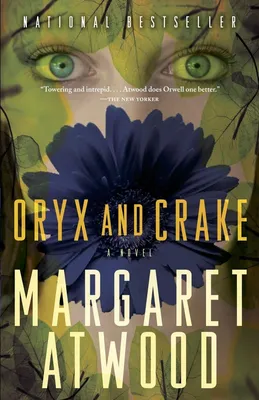
| Publisher | Anchor |
| Published | 2004-03-30 |
| Pages | 402 |
| ISBN | 9781400078981 |
| Categories | Fiction |
| Google Rating | 4/5 (44 ratings) |
What Readers Say
Oryx and Crake consistently lands on "best sci-fi novel" lists for good reason. Readers describe it as "amazing and creepy," and it's the kind of book people name when asked what they'd forget just to experience again for the first time. One commenter on r/printSF called it their favorite sci-fi book, period — and that was in a thread dominated by heavyweights like Hyperion and A Fire Upon the Deep.
What comes up again and again is how disturbingly plausible Atwood's worldbuilding feels. The lab-grown food, the corporate compounds, the casual genetic tinkering — readers say they think about these details constantly as real-world technology catches up. It's speculative fiction that doesn't feel speculative anymore, which is exactly what makes it so unsettling.
The MaddAddam sequels get strong praise too, with some readers arguing they're better than the original in certain ways. But Oryx and Crake stands powerfully on its own.
Who It's For
If you loved The Handmaid's Tale but want something with a harder sci-fi edge, this is your next read. Readers frequently recommend it alongside Slaughterhouse-Five, 1984, Station Eleven, and Parable of the Sower — so if any of those resonate, you're in the right territory. It also gets recommended to people who want adult dystopian fiction without the YA tropes of teenagers saving the world. One reader noted that it "spoke to me growing up as a male millennial more than anything else I have ever read," which says something about how broadly this book connects despite defying easy categorization.
Reading Context
This is darker and more unsettling than most dystopian fiction, so fair warning if you're looking for something light. The story unfolds through flashbacks as possibly-the-last-human-alive Snowman pieces together how civilization collapsed, and that structure keeps you hooked even when the subject matter is grim. At 402 pages it's a substantial but not intimidating read, and it works perfectly well as a standalone even though two sequels follow.