Book recommendations, reviews, and reading lists.

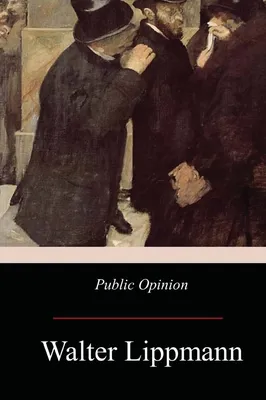
Public Opinion
by Walter Lippmann
| Publisher | Simon and Schuster |
| Published | 1997 |
| Pages | 292 |
| ISBN | 9780684833279 |
| Categories | Political Science |
What Readers Say
Public Opinion is one of those books that gets called "foundational" so often that people assume they already know what's in it. They usually don't. Lippmann's core concept — the "pseudo-environment," the gap between the world as it actually exists and the simplified picture of it inside our heads — was radical when he published it in 1922 and remains the starting point for anyone serious about understanding propaganda, media theory, or political communication.
What makes Lippmann unusual among the writers on this shelf is his sympathy. He's not trying to expose a conspiracy or burn down an institution. He takes seriously the problem that journalists and citizens face: the world is too complex for any individual to understand directly, so we rely on mediating images, and those images are always incomplete. That analytical stance — less polemic, more diagnostic — is why academics still point to this as "generally a starting point" for studying propaganda even when they dismiss more popular works in the field.
The honest warning: this is a century-old book and it reads like one. The prose is elegant but deliberate, and Lippmann assumes a reader with patience. It rewards that patience, but it's not a weekend read.
Who It's For
Readers interested in intellectual history who want to start at the source. If you've read Chomsky's Manufacturing Consent and want to understand the framework he's pushing back against, this is it. Lippmann is the thinker who took the problem of public knowledge seriously without assuming the answer was obvious, and reading him changes how you understand everyone who came after.
Reading Context
Public Opinion is the grandfather text in a lineage that runs through Postman, Chomsky, McLuhan, and Arendt. Readers who want the scholarly companion piece should pair it with Propaganda & Persuasion by Jowett and O'Donnell, which is the most widely respected academic treatment of the subject. For something more modern that picks up Lippmann's threads, Pomerantsev's This Is Not Propaganda shows what happens to the pseudo-environment when the internet makes reality negotiable. The concept of manipulated public opinion also echoes through science fiction — Heinlein's The Moon Is a Harsh Mistress and Card's Ender's Game both explore what happens when information systems are used to shape collective belief.