Book recommendations, reviews, and reading lists.

The Winter of Our Discontent
by John Steinbeck
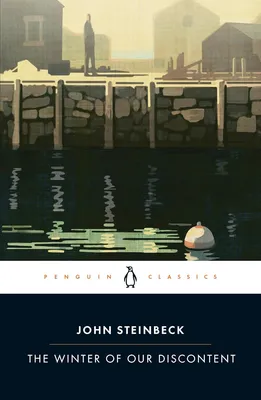
| Publisher | Penguin |
| Published | 2008-08-26 |
| Pages | 340 |
| ISBN | 9780143039488 |
| Categories | Fiction |
What Readers Say
When I survey the mentions, The Winter of Our Discontent seems to occupy this fascinating, quiet corner of the Steinbeck universe—passionately loved by a devoted few but largely bypassed in the broader conversation. One reader simply drops the title as their favorite Steinbeck without elaboration, which tells me the book operates on a level where explanation feels almost reductive. You just have to experience it. Another commenter groups it with Tortilla Flat as one of Steinbeck’s less-discussed works, and I think that obscurity is part of what makes its advocates so fervent. They feel like they’ve uncovered something.
The most specific praise I see zeroes in on the book’s central relationship dynamic. A reader describes it as a scenario where a powerful woman charms a cautious man, insisting this isn’t a romance novel but that this dynamic sits right at the story’s heart. That observation intrigues me because it suggests Steinbeck was subverting gender expectations in 1961 in ways that still catch readers off guard. The same comment emphasizes that the description is “exactly how I would describe two of the characters,” which tells me the characterization lands with precision.
Beyond the interpersonal dynamics, readers consistently frame this as Steinbeck’s critique of materialism and hollow social values. One recommendation pairs it directly with Revolutionary Road, another mid-century dissection of suburban dissatisfaction. I get the sense that readers find this novel morally bracing—Steinbeck holding up a mirror to American consumerism and asking uncomfortable questions about what integrity actually costs. The book doesn’t seem to provide easy answers, and that’s exactly what its admirers respect about it.
Who It's For
I’d point you toward The Winter of Our Discontent if you’ve read East of Eden and The Grapes of Wrath and want to engage with Steinbeck’s later, more interior mode. This isn’t the sweeping California epic—it’s a tight, morally intricate study of one man’s compromise, set in a small New England town. If you connected with the psychological realism of Richard Yates’s Revolutionary Road or the quiet desperation in Walker Percy’s The Moviegoer, this book operates in similar territory. You’re the reader who finds suspense not in plot twists but in watching a character slowly talk themselves into betraying their own principles.
This is also for readers drawn to unconventional relationship dynamics in literary fiction. The comment highlighting the “powerful woman charming a cautious man” suggests Steinbeck wrote something that resists genre categorization—not a love story, but a story fundamentally shaped by the magnetic pull between two people with imbalanced power. If you appreciate fiction that examines how desire and moral decay intertwine, this belongs on your list.
Reading Context
The mentions suggest readers encounter this book in a few key ways. One reader, who maintains an impressively high satisfaction rate by carefully curating their reading list, had The Winter of Our Discontent queued up next—right alongside Bolaño’s 2666. That placement tells me something about the literary weight readers assign to this novel. It’s not breezy Steinbeck; it rewards the same deep attention you’d bring to a modernist doorstop.
I notice it often gets paired with mid-century critiques of American life, particularly Revolutionary Road, which makes sense given both books examine the rot beneath suburban surfaces. Within Steinbeck’s own body of work, I’d recommend approaching it after you’ve absorbed his more famous California novels—East of Eden, Cannery Row, Of Mice and Men—so you can appreciate how thoroughly he shifted his lens to the East Coast and to a protagonist wrestling with moral erosion rather than economic survival. There’s no adaptation to point you toward, which feels appropriate for a novel this introspective. Just know going in that this is a slow, psychological burn where the major action happens inside Ethan Allen Hawley’s conscience.