Book recommendations, reviews, and reading lists.

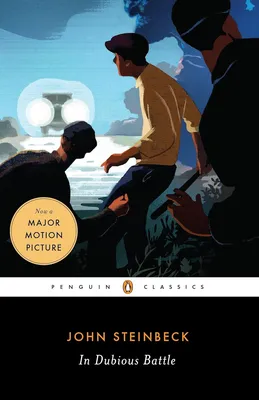
In Dubious Battle
by John Steinbeck
| Publisher | Penguin UK |
| Published | 2001-01-18 |
| Pages | 371 |
| ISBN | 9780141186023 |
| Categories | Fiction |
What Readers Say
When readers pick up In Dubious Battle, they often brace for a Steinbeck novel that champions the working class the way The Grapes of Wrath does—and that’s exactly where this book surprises them. I notice readers consistently point out that Steinbeck isn’t cheerleading for either side here. He’s watching. The moral ambiguity hits hard, and people mention how grimmer and more unsettling it feels than his other Depression-era work. One observation that sticks with me is the title’s origin in Paradise Lost, where Milton describes the war in heaven as fought “in dubious battle.” That framing haunts the entire novel—readers feel the weight of a struggle where no one emerges clean, and collective action comes with sharp limits rather than easy redemption.
What readers seem to wrestle with most is the coldness at the center of the story. The party organizers aren’t warm heroes; they’re calculating, willing to use people as instruments for the cause. I see readers mention this as both the book’s greatest strength and its hardest pill to swallow. Steinbeck refuses to sentimentalize the labor movement, and that honesty unsettles people who expected a more romantic revolutionary tale. The pacing gets occasional criticism—some find it more political in texture than narrative—but the psychological tension between characters, and the sense of a strike spiraling beyond anyone’s control, keeps most readers locked in.
Another thread I pick up is how this book sits uneasily in Steinbeck’s catalog. It doesn’t offer the lyrical humanity of East of Eden or the intimate tragedy of Of Mice and Men. Instead, readers describe it as a novel of ideas played out through bodies and desperation, where the cause itself becomes a character. People who come to it for labor history often stay for the uncomfortable questions it raises about who gets sacrificed and why.
Who It’s For
This book is for the reader who loved the structural fury of The Jungle by Upton Sinclair but craves something that turns the same critical eye inward, toward the movement’s own machinery rather than just the external oppressor. If you appreciated how Jack London’s The Iron Heel explores political struggle without flinching, In Dubious Battle operates in that same territory—except Steinbeck’s gaze is less didactic, more eerily detached. I’d hand this to someone who finished The Grapes of Wrath and wondered about the moments where solidarity frays, where the Joads’ communal spirit bumps against harder, more pragmatic tactics. It’s also a strong fit for readers drawn to morally ambiguous historical fiction that doesn’t resolve neatly. If you need characters to root for unambiguously, this might not be your Steinbeck; but if you can handle watching decent impulses curdle under pressure, you’ll find plenty to chew on.
Reading Context
Readers often pair In Dubious Battle with The Jungle to get both the immigrant labor experience and the organized strike perspective side by side—they complement each other’s blind spots. In Steinbeck’s own body of work, this belongs with the Depression-era novels that made him both famous and controversial, and I’d suggest reading it after The Grapes of Wrath if you want to trace how his treatment of collective struggle grew more complicated and less hopeful. There isn’t a major film adaptation to lean on here, which means the book stands alone in the imagination, undiluted. Before starting, it helps to know that Steinbeck wrote this in the mid-1930s, while labor battles were raging in California, and that his research involved firsthand observation of strikes and conversations with organizers. The novel expects you to sit with discomfort rather than resolve it. Some readers recommend going in aware that the title is your guide—the battle is dubious, the victors uncertain, and the moral ground keeps shifting under everyone’s feet.