Book recommendations, reviews, and reading lists.

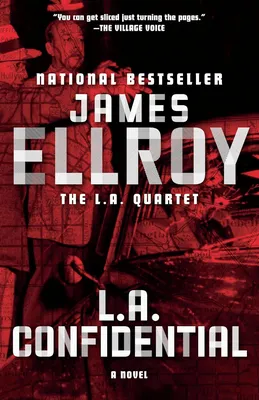
LA Confidential
by James Ellroy
| Publisher | Random House |
| Published | 2012-03-31 |
| Pages | 498 |
| ISBN | 9781448108572 |
| Categories | Fiction |
What Readers Say
I keep coming back to how readers describe the sheer intensity of Ellroy’s vision here. The prose gets called “dense and staccato” like a telegraph machine firing on all cylinders, and that rhythm seems to be the thing that either hooks you instantly or leaves you struggling to find the beat. Those who love it say the style isn’t just a gimmick—it’s the engine of the book’s whole brutal momentum, dragging you through 1950s Los Angeles as a sewer system of corruption, vice, and institutionalized rot. What consistently gets praised is that the darkness isn’t “decorative”; it’s woven into every cop, every politician, every headline. Readers point out that Ellroy took Chandler’s hardboiled ingredients and boiled them harder, longer, until everything reduces to a black syrup that coats every page. You don’t just visit a corrupt L.A. here—you feel it in your teeth.
The consensus I see is that this isn’t comfort reading. The violence is systemic, the morality is smeared well past gray, and the three central cops—Bud White, Jack Vincennes, and Ed Exley—are often described as flawed in ways that make you cringe while you can’t look away. Surprise for many comes from how the plot ratchets together: what starts as a diner massacre spirals into a conspiracy that ties together the police force, tabloid journalism, prostitution rings, and the Hollywood dream machine, all clicking into place with the inevitability of a handcuff. A common refrain is that the payoff feels earned precisely because Ellroy doesn’t flinch from making you complicit in the grime.
Who It’s For
This is for readers who finished The Big Sleep and wished someone had stripped away the last layer of romanticism Marlowe still carried. If you found Chandler’s prose music and then thought, “I need this same city, but drenched in acid,” LA Confidential is your next stop. Repeatedly, I see fans of the noir tradition cite Ellroy as the writer who pushes the genre beyond its mid-century manners, making the violence more explicit and the psychology more desperate. It’s also for anyone who loves sprawling ensemble stories where the city itself becomes the main character—if you’ve devoured things like The Wire in book form, the multi-threaded investigation here will feel familiar in the best way. Readers often recommend it alongside other dark pillars: The Alienist for period dread, or My Darkest Prayer for that same sense of moral quicksand.
Reading Context
From what I gather, readers rarely read this in isolation. It’s the third book in the LA Quartet, and although many insist it stands alone perfectly, those who start with The Black Dahlia and The Big Nowhere say the emotional gut-punch deepens when you’ve seen the history these cops carry. The books that get paired with it most in conversation are other noir touchstones: Farewell, My Lovely and The Last Good Kiss for that hardboiled lineage, Eight Million Ways to Die for the same unflinching look at an alcoholic detective’s slide into oblivion. What I’d tell someone before starting is to respect the tempo. The staccato prose isn’t casual; it demands you slow down and let the rhythm take hold. Know that Ellroy will not hold your hand through the darkness, and the payoff isn’t a hero’s redemption—it’s a truth that will sit in your stomach like a cold weight. There’s a famous film adaptation, but readers I’ve seen always push the book harder because of how much internal rot the screen can only gesture at.