Book recommendations, reviews, and reading lists.

Best Japanese Classic Books to Read Before You Die
April 21, 2026 · Written by Josh
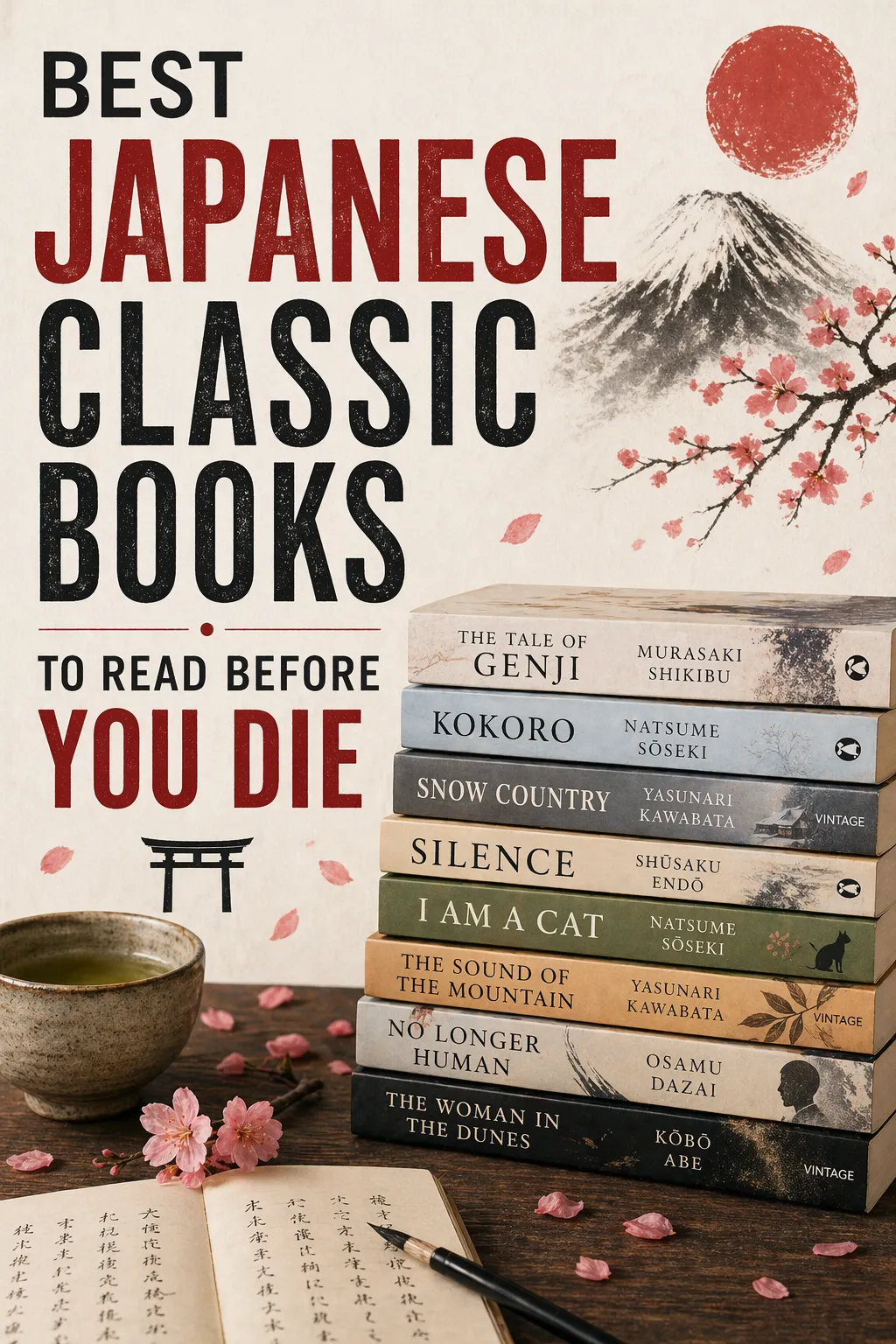
The Literature That Quietly Wrecked Me
I came to Japanese classics late and completely by accident — someone mentioned Natsume Soseki in passing and I looked him up mostly out of embarrassment that I hadn't heard of him. That was a mistake. Not the reading part. The assuming-I-already-knew-what-great-literature-looked-like part.
What makes pre-1980s Japanese fiction so distinct from the Western canon isn't the surface-level exoticism that bad literary tourism leans on. It's the emotional architecture. These books treat shame, alienation, and aesthetic beauty as serious moral and psychological subjects. Characters feel bad in ways that are rigorously examined, historically specific, and somehow also completely universal. You read Dazai describing social humiliation and you think, yes, obviously, why hasn't anyone said it this clearly before.
The other thing: these writers were working through one of history's most dramatic cultural collisions — the forced modernization of Japan, the weight of tradition cracking under Western influence, the aftermath of war. That pressure is embedded in the fiction in ways that make it alive. You're reading the fracture lines of an entire civilization trying to figure out what it is.
1. No Longer Human by Osamu Dazai
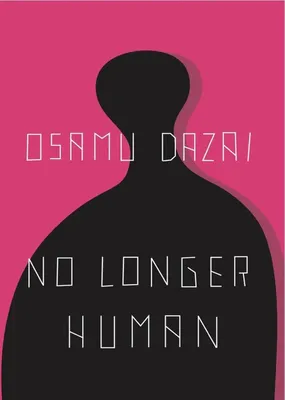
This is the book that gets passed around in certain circles like a secret. Dazai's semi-autobiographical novel follows a man who has spent his entire life performing being human — mimicking emotions he doesn't feel, telling jokes to deflect, wearing normalcy like a costume. The horror is that it works. Nobody sees through the performance because nobody's looking that carefully.
It's bleak, yes. It's also one of the most precisely observed portraits of alienation I've read in any language. Dazai wrote it just before his death by suicide, and that context is impossible to ignore — but the book stands entirely on its own as a piece of psychological fiction and as a biography.
Who it's for: Anyone who has ever felt like they're watching their own social interactions from a slight distance, wondering how everyone else seems to find it so effortless.
2. Kokoro by Natsume Soseki
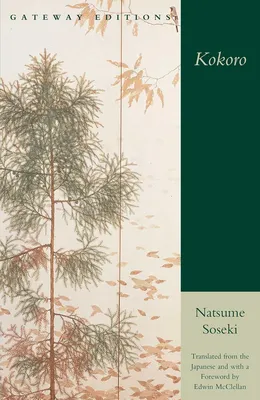
The title translates roughly as "heart" or "the heart of things," and the novel delivers exactly that — a slow, devastating excavation of loneliness, guilt, and the impossibility of truly knowing another person. A young student befriends an older man he calls Sensei, and the relationship unfolds across letters and memory into something much darker than either of them expected.
Soseki was writing at the exact moment Japan was trying to metabolize the Meiji Restoration — traditional values colliding violently with Western modernity — and Kokoro captures that tension in every relationship in the book. The ending destroyed me in a quiet way that took a few days to fully land.
Who it's for: Readers who loved the restraint and emotional weight of Ishiguro's The Remains of the Day and want something with similar DNA but sharper edges.
3. Snow Country by Yasunari Kawabata
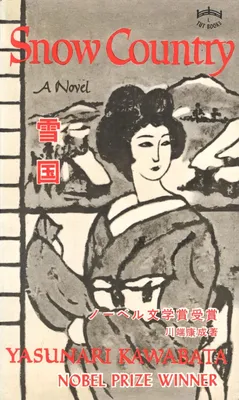
The first line — "The train came out of the long tunnel into the snow country" — is one of the great opening sentences in world literature. I will not hear otherwise. Kawabata writes in this spare, almost haiku-adjacent prose that creates atmosphere with almost nothing, and Snow Country is his technique at full stretch: a doomed love affair in a remote mountain resort, rendered with so much beauty and emotional precision it almost hurts to read.
There's a loneliness to this book that isn't despair so much as it is… clarity. These two people understand that what they have cannot last, and somehow that understanding makes the whole thing more intensely felt rather than less.
Who it's for: Readers who want literary fiction that trusts them to feel things without spelling it out. If you need your emotions confirmed by the prose, this one will frustrate you. If you can sit with the unsaid, it will stay with you for years.
4. The Woman in the Dunes by Kobo Abe
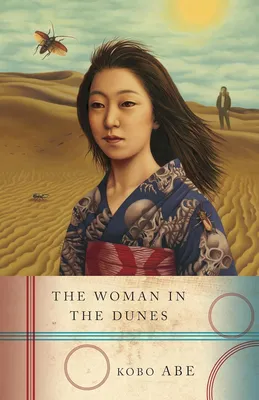
An entomologist on a day trip to collect insects misses the last bus home, gets offered shelter by the locals, and wakes up trapped at the bottom of a sand pit with a widow whose job it is to shovel sand every night to keep the village from being buried. That's it. That's the plot. And it is one of the most genuinely unsettling novels I've ever read.
Abe was influenced by Kafka and it shows — this has the same dream-logic quality, the same sense of bureaucratic surrealism, the same questions about freedom and complicity and whether comfort is the same thing as giving up. But it's also purely Japanese in its philosophical concerns. The absurdism hits differently here.
Who it's for: Kafka readers who want something that pushes the same existential buttons but with more physical dread and a lot more sand.
5. The Temple of the Golden Pavilion by Yukio Mishima
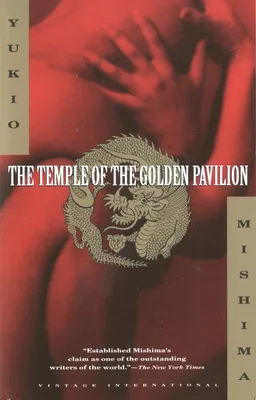
Based on the real 1950 arson of Kinkaku-ji by a young Buddhist acolyte, Mishima turns the incident into a novel-length exploration of obsession, beauty, and destruction. The narrator is a stuttering, alienated young monk who becomes so consumed by the Temple's perfection that he can only conceive of one way to possess it fully.
Mishima's prose is extraordinary — dense, sensory, almost unbearably precise about beauty. The psychology of the narrator is genuinely disturbing in the best way: you understand him completely and that's the most unsettling part. One of the most sophisticated portraits of a troubled mind in world literature.
Who it's for: Readers drawn to the intersection of aesthetics and obsession — Nabokov readers, Donna Tartt readers, anyone who finds beauty and danger occupying the same psychological space.
6. Confessions of a Mask by Yukio Mishima
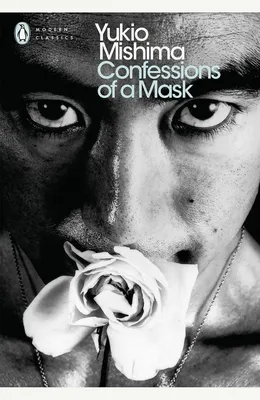
Where Temple is about beauty as destruction, Confessions is about performance as survival. Mishima's first major novel is semi-autobiographical: a young man in postwar Japan, aware from childhood that his desires mark him as fundamentally apart from the world around him, constructs an elaborate performance of normalcy to survive. The prose is cold and precise and mercilessly honest.
Multiple Reddit readers compared this directly to No Longer Human, and I think that's right — both are about the exhaustion of performing identity, both are semi-autobiographical, and both are written with a kind of controlled desperation. If you loved Dazai, this is the next stop.
Who it's for: No Longer Human readers who want more — same DNA, different cultural lens, equally devastating.
7. The Setting Sun by Osamu Dazai
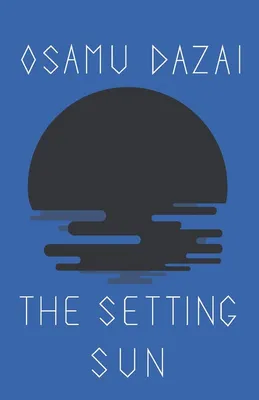
If No Longer Human is Dazai at his most internal, The Setting Sun is Dazai with his camera turned outward — a portrait of an aristocratic family in the ruins of postwar Japan, their world literally gone, their values suddenly without context. Told largely from the perspective of Kazuko, a woman trying to rebuild her life from the wreckage, it's warmer and more social than No Longer Human but no less devastating.
Dazai was writing about the collapse of an entire class and an entire set of assumptions about what Japanese life was supposed to look like. Sixty years later, it reads like a document of something that actually happened to real people — which, of course, it is.
Who it's for: Readers who want to understand postwar Japan through the eyes of people who lost everything trying to preserve something that no longer existed.
8. I Am a Cat by Natsume Soseki
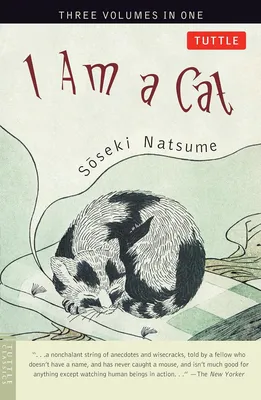
A satirical novel narrated by a cat who lives with a mediocre, pompous schoolteacher and observes the absurdities of Meiji-era Japanese society with the detached contempt of a creature who has no stake in any of it. It's funny — genuinely, pointedly funny — in a way that Soseki's other work isn't. The cat's observations about human vanity, intellectual posturing, and social performance land with the precision of someone who's been watching the species for centuries and is still not impressed.
The serialized original ran for over a year and it shows — the structure is loose, episodic, and comfortable in its own digressive logic. It rewards patience. The comedy gets sharper as you go.
Who it's for: Readers who want Japanese classics but aren't in the mood for existential tragedy — same era, same sharp observations, entirely different emotional register.
9. Hell Screen by Ryunosuke Akutagawa
Akutagawa is the master of the short story in Japanese literature, and Hell Screen is where most people start for good reason: it's about an artist commissioned by a feudal lord to paint Hell as realistically as possible, and the increasingly terrible things that happen as he pursues that vision. It's about art, obsession, cruelty, and whether creating something true justifies what it costs.
Short enough to read in a single sitting, dense enough to think about for days. Akutagawa's Rashomon is the more famous story — it's the one that gave Kurosawa his film title — but Hell Screen is the one that actually haunts.
Who it's for: Short story readers wanting a controlled entry point into Japanese classics. Start here if you're not sure you're ready for a full novel.
10. Rashomon and Seventeen Other Stories by Ryunosuke Akutagawa
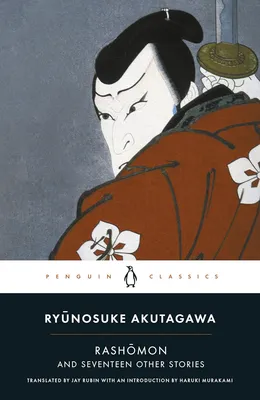
The collected stories, for when Hell Screen leaves you wanting more. Akutagawa worked in a mode that's hard to classify — historical, fabulist, deeply psychological, formally precise. In a Grove (the source material for Kurosawa's Rashomon film) gives you multiple contradictory accounts of a samurai's death and refuses to tell you which one is true. Yabu no Naka does something similar with marriage. The whole collection is about the impossibility of objective truth and the stories we tell to survive.
He died by suicide at thirty-five, and the late stories — including "A Fool's Life" and "Cogwheels" — are documents of a mind coming apart in real time. They're unlike anything else in the collection and unlike anything else in world literature.
Who it's for: Anyone who wants their short fiction to feel like it was written by someone with something real at stake. These are not craft exercises.
11. Silence by Shusaku Endo
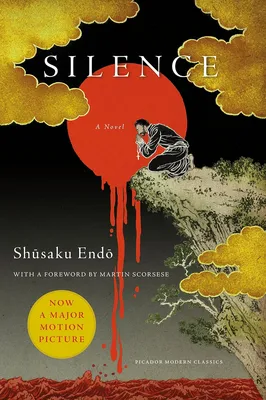
Portuguese Jesuit missionaries in seventeenth-century Japan, hunted, hidden, and eventually forced to choose between their faith and the lives of Japanese Christians who will be killed unless the missionaries publicly apostatize. Silence is one of the most serious novels about faith I've read — not an argument for or against Christianity, but an honest examination of what it means to believe something when that belief is tested to destruction.
The title refers to God's silence in the face of suffering. Endo was Catholic, and he was writing about his own tradition from the inside, which gives the novel a weight that outside critique can't replicate. Martin Scorsese spent twenty-five years trying to adapt it. That's a useful data point about how much it affected people.
Who it's for: Readers interested in faith, doubt, and moral impossibility — or anyone who wants historical fiction that actually earns its weight.
12. The Makioka Sisters by Junichiro Tanizaki
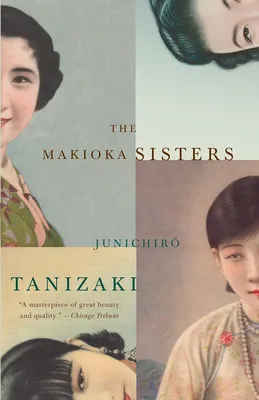
Four sisters from a declining Osaka merchant family, the social pressure of finding husbands for the younger two, the seasons turning, the world changing around them — and Tanizaki capturing all of it in prose so precise and unhurried it feels like watching the light shift in an old house. This is the novel people mean when they talk about Japanese literary fiction as a distinct aesthetic tradition: slow, atmospheric, deeply attentive to surface and texture as moral indicators.
It's long. It does not hurry. If you come to it expecting plot in the Western sense, you will be frustrated. If you come to it willing to inhabit its rhythms, it will feel like you lived inside a particular world for the months it takes to read it.
Who it's for: Readers who loved In Search of Lost Time or The Brothers Karamazov in the sense of books that create a complete world rather than just a story. Patience required, but the payoff is real.
13. Spring Snow by Yukio Mishima
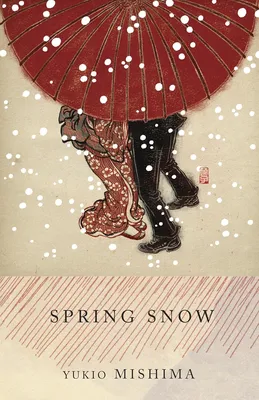
The first volume of Mishima's four-novel Sea of Fertility tetralogy, and the most accessible entry point into his later work. A wealthy young man in Taisho-era Japan falls in love with a childhood friend who is engaged to a prince — and then, because he is Mishima, proceeds to ruin it in the most beautiful, self-destructive way possible. The prose is lush and formal. The tragedy is inevitable from the first chapter. You read it anyway.
The Sea of Fertility novels are Mishima's attempt at a total summing-up of Japanese civilization and consciousness across four decades and four incarnations of the same soul. Spring Snow is the most emotionally direct of the four. Start here before committing to the full tetralogy.
Who it's for: Readers ready for their first serious Mishima, or anyone who loves doomed romance in the classical mode — Anna Karenina territory, but Japanese and even more formally controlled.
Where to Start Based on Who You Are
If you want something psychologically intense and short: start with No Longer Human or Akutagawa's Hell Screen. Both are compact, both hit hard, and both give you a real sense of what Japanese classic fiction is doing aesthetically.
If you want something more meditative and atmospheric: Snow Country or Kokoro. Kawabata's spare prose and Soseki's restraint are different flavors of the same tradition — both require you to slow down, and both reward it.
If you want something genuinely strange: The Woman in the Dunes. Abe is the outlier on this list, closer to Kafka than to any of the others, and that makes him a useful point of entry if you're coming from European modernism.
If you want to go deep: Mishima. Confessions of a Mask first, then Temple of the Golden Pavilion, then — if you're still standing — Spring Snow and the rest of the tetralogy. He's the most maximalist writer on this list, the most obsessive, the most willing to push into difficult territory. Not everyone's appetite. But for the readers who connect with him, there's nobody else quite like him.
The through-line across all of these — Soseki's loneliness, Dazai's alienation, Kawabata's beauty, Mishima's obsession, Endo's silence — is a tradition that takes inner life seriously as a subject. Not as a backdrop for plot, not as decoration for character work, but as the actual thing the fiction is about. That's what keeps me coming back.
Continue Reading
Best Classic Books That Aren't Dense (Or Boring)
You don't have to slog through 900 pages of Russian sadness to engage with the canon. These classics are short, readable, and actually good.
Best Love Stories: Books That Actually Earn the Feeling
The best love stories aren't about falling in love — they're about what love costs, what it survives, and what it does to you. Here are the ones that actually earn the feeling.